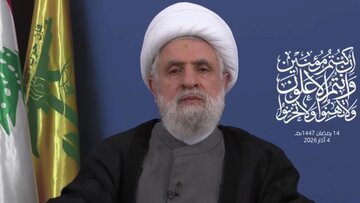
AhlulBayt News Agency (ABNA): Members of the organizing committee for the National Commemoration of Ayatollah Yazdi, held under the title “Pioneers of the Islamic Movement: Ayatollah Mohammad Yazdi,” met with Ayatollah Reza Ramezani, Secretary-General of the AhlulBayt (a.s.) World Assembly, to review progress on preparations for the event.
During the meeting, a report was presented on the activities of the Mohammadiyya Higher Institute for Training Manager-Jurists, the institution responsible for organizing the commemoration. This center, founded as part of Ayatollah Yazdi’s endowment for the training of capable and prudent jurists, was established to cultivate qualified personnel for the judiciary and other jurisprudential roles within the system.
Ayatollah Ramezani, commending the institute’s efforts to train contemporary jurists capable of addressing the needs of the Islamic Republic, emphasized the importance of promoting the AhlulBayt (a.s.) discourse globally.
He stated, “By virtue of the Revolution, we are obliged to share the AhlulBayt (a.s.) discourse with the world. This discourse has the potential to shape the most effective form of public diplomacy.”
Ayatollah Ramezani stressed that for this discourse to be effective, it must be presented to the world in a comprehensive, precise, and profound manner. He argued that none of the prevailing global ideologies, whether liberalism or socialism, can stand against the all-encompassing discourse of the AhlulBayt (a.s.).
The Secretary-General noted that before the Islamic Revolution, Iran stood at the margins of history, but the Revolution brought Iran to the center of historical developments, expanding the geography of resistance.
He described safeguarding the Revolution as an absolute priority, saying that the seminary must preserve its revolutionary outlook and resistance to global hegemonic powers, which seek only to humiliate, threaten, or force submission. In his view, negotiations under such a hegemonic framework amount to imposed dictates.
A revolutionary seminary, he said, is one that upholds the core principles of the Revolution, justice, independence, and freedom, and articulates the Republic’s popular legitimacy on the basis of its Islamic identity.
**************
End/ 345