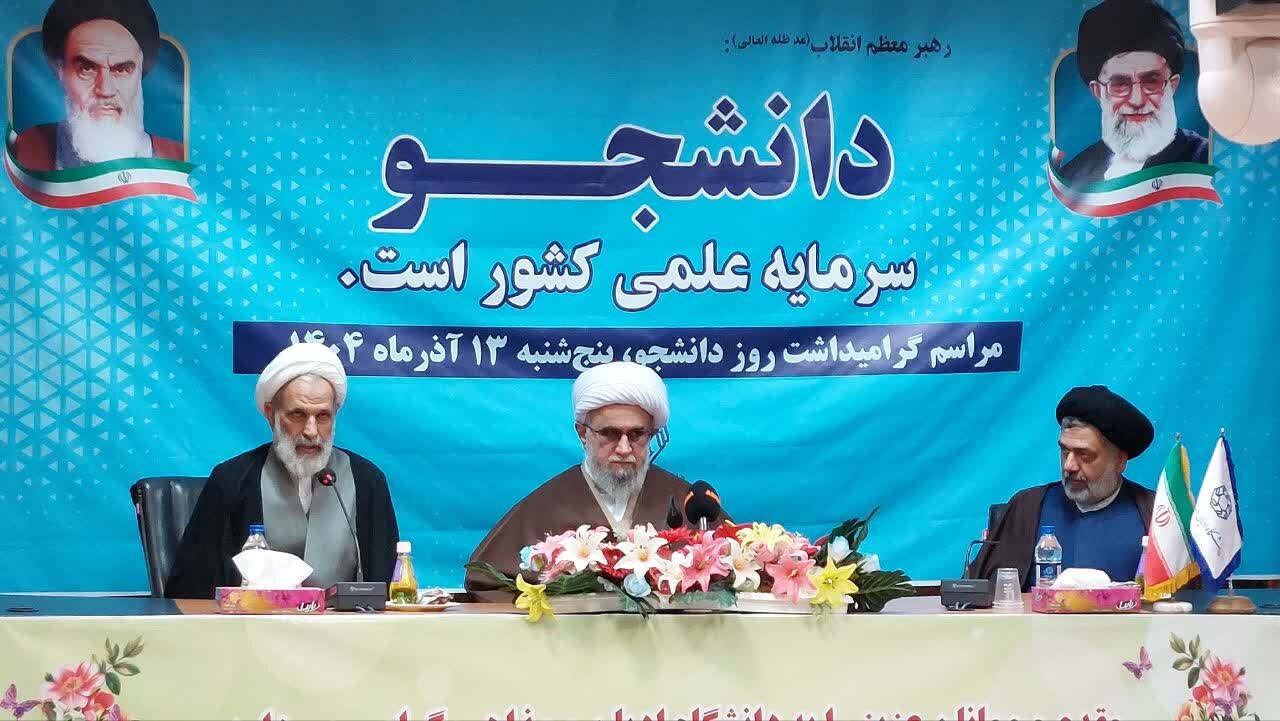
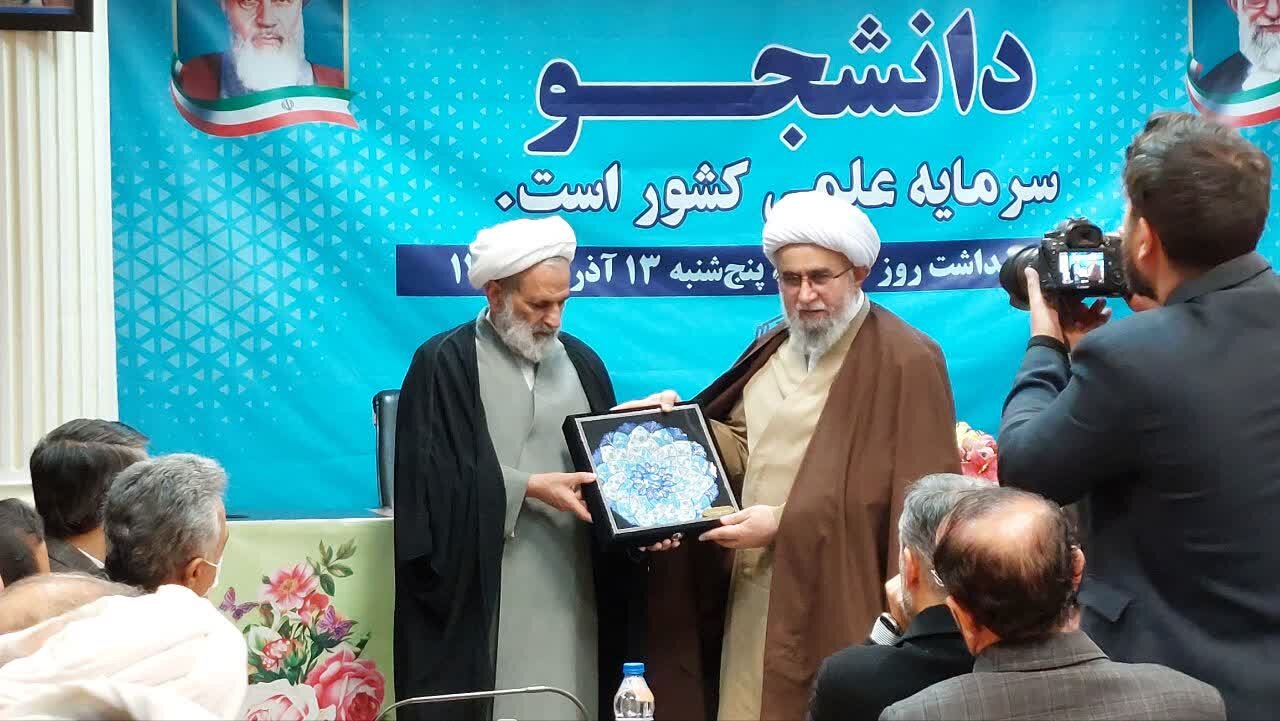
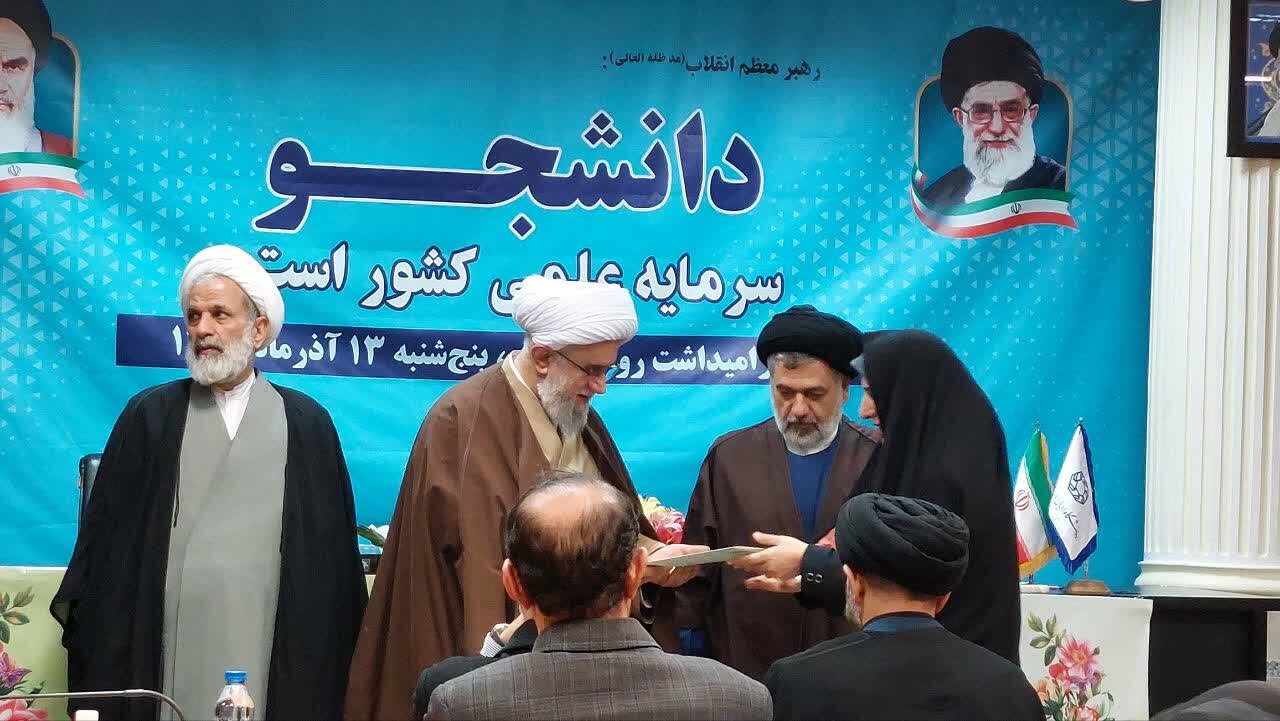
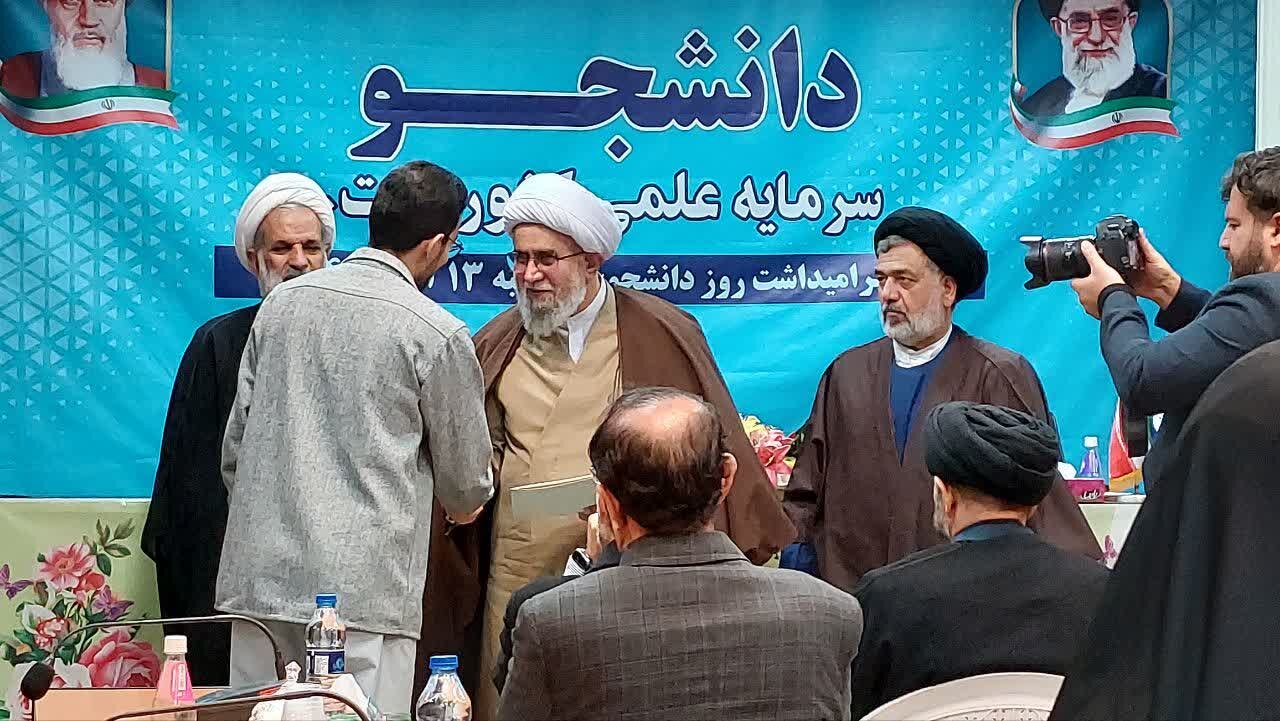
AhlulBayt News Agency (ABNA): In an address marking Student Day at the University of Religions and Denominations, Ayatollah Ramazani underscored the intellectual, ethical, and political significance of the teachings of the AhlulBayt (a.s.), particularly Imam Ali (a.s.) and Lady Fatimah (a.s.), highlighting the scholarly mission of the university and its role in reforming society.
He described the University of Religions and Denominations as one of the blessed institutions born of the Islamic Revolution, established to cultivate scholars capable of shaping intellectual paradigms on a global stage.
Ayatollah Ramazani outlined what he called the three essential pillars of any university:
Turning to investment in scientific advancement within an Islamic polity, he rejected the notion of any contradiction between religion and reason, or between religion and science. “The more knowledge a person acquires,” he said, “the more his attention to God should increase.”
Addressing the characteristics of a Muslim student navigating tradition and modernity, Ayatollah Ramazani said that students must remain loyal to future-oriented goals while remaining alert to new transformations emerging from modernity.
He noted that rationality and the pursuit of knowledge are central features of the governance system of Imam Mahdi (a.s.).
He then outlined key attributes of a Muslim student:
Genuine inquiry oriented toward producing knowledge, which he described as the foundation for scientific contribution. He pointed to Iran’s rise in global scientific rankings from 57th to 17th after the Revolution, adding that some disciplines have reached the top ten.
Specialized accountability, explaining that student demands must be “specialized, not sensational,” and that criticism must be scholarly, realistic, and sincere.
A commitment to justice, which he identified as an affirmative obligation spanning intellectual, structural, and behavioral realms.
Opposition to oppression, noting global disparities in wealth: “Ninety percent of the world’s wealth is held by ten percent of the population, and ten percent of the wealth is left for the other ninety percent.” A Muslim student, he said, must confront such systemic inequalities.
Ayatollah Ramazani also referred to the guidance of the Leader of the Islamic Revolution, noting that in the “Second Phase of the Revolution” statement, seven pillars of national development were outlined, with scientific progress at the top, followed by ethics and spirituality, justice-seeking, fighting corruption, and shaping a meaningful lifestyle. Universities and seminaries, he said, have decisive roles in each.
Turning to concrete examples of global oppression, he pointed to what he termed “systemic injustice” in places such as Gaza, where women and children are killed “without the slightest reaction from global powers.” He cited a Zionist minister who stated openly that he enjoyed the killing of Palestinian children, adding that “they tear people apart like wolves, and no one stops them.”
Commenting on negotiations with the West, he said: “We negotiate, and then in the middle of negotiations they permit themselves to attack Iran. They either humiliate, threaten, or call for surrender, seeking to impose their own views.” True negotiation, he emphasized, requires reciprocity in capacities, not the unilateral imposition of one party’s demands.
**************
End/ 345