

AhlulBayt News Agency (ABNA): Titled “Unequal Citizens: Systematic Discrimination and Human Rights Violations Against Muslims in India, 2014–2025,” the report, published in March 2026, examines developments since the Bharatiya Janata Party (BJP), led by Prime Minister Narendra Modi, came to power nationally in 2014.
The study was prepared for consideration by the UN Human Rights Council, international nongovernmental organizations, academic institutions and legal bodies. It focuses on issues including hate speech, citizenship laws, communal violence, property demolitions, arrests, restrictions on religious practices and the treatment of vulnerable Muslim communities.
Increase in Reported Hate Speech
Citing data from the India Hate Lab and figures reported by Reuters, the study says 1,318 incidents of hate speech targeting minorities were recorded in India in 2025, compared with 668 in 2023. The report calculates an increase of about 97 percent over the two-year period.
It says 1,164 of the incidents recorded in 2025 occurred in states governed by the BJP, with Uttar Pradesh accounting for the largest share.
The report's authors argue that the concentration of incidents in BJP-governed states points to a relationship between political rhetoric and violence targeting minorities. The BJP, however, has rejected the report's findings.
Citizenship Law and Assam
The report devotes significant attention to India's Citizenship Amendment Act (CAA), passed in 2019. It says the legislation provides a faster route to Indian citizenship for members of six religious communities from Afghanistan, Bangladesh and Pakistan, while excluding Muslims from the same provision.
The study notes that the UN Office of the High Commissioner for Human Rights previously raised concerns that the law was discriminatory. Amnesty International and the U.S. Commission on International Religious Freedom have also expressed concerns over its provisions.
The report further discusses India's National Register of Citizens in Assam, saying about 1.9 million people were excluded from the final list, with a disproportionate number described as Bengali-speaking Muslims. According to the study, the exclusions increased concerns about possible statelessness.
Delhi Violence and Police Conduct
Another section examines the communal violence that erupted in northeast Delhi in February 2020. Human Rights Watch has documented at least 53 deaths during the violence, with Muslims making up the majority of those killed.
Citing Human Rights Watch research, the report alleges that some police officers either participated in attacks against Muslim residents or failed to intervene to protect them. It also alleges that Muslim activists and victims subsequently faced legal proceedings, while some political figures accused of making inflammatory statements before the violence did not face comparable legal consequences.
The report also refers to the 2002 Gujarat violence, which occurred while Modi was serving as the state's chief minister. Human rights organizations have estimated that between 1,200 and 2,500 people were killed, most of them Muslims.
The study presents the Gujarat violence, along with incidents in Muzaffarnagar in 2013 and Delhi in 2020, as examples of what it describes as recurring patterns of communal violence and subsequent accountability concerns.
Property Demolitions and “Bulldozer Justice”
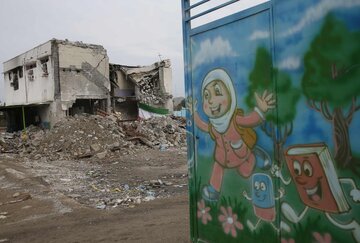
The report also examines demolitions of homes and businesses belonging to Muslims, a practice widely described in India as “bulldozer justice.”
Citing the Housing and Land Rights Network, it says more than 740,000 people were displaced by property demolitions in 2022 and 2023, while more than 150,000 homes were demolished.
The report also cites separate Amnesty International research documenting the demolition of around 2,840 properties across several Indian states between 2020 and 2022.
In November 2024, India's Supreme Court ruled that punitive demolitions were unconstitutional and incompatible with fundamental legal protections, including the right to shelter and the principle of presumption of innocence. The report says civil society monitoring nevertheless documented continued demolitions into 2025.
State authorities have defended such actions as enforcement of laws against unauthorized construction.
Arrests and UAPA Cases
The study examines the use of India's Unlawful Activities (Prevention) Act, or UAPA, which it says has been used against activists, students and journalists.
It cites a conviction rate of 2.2 percent in UAPA cases between 2016 and 2019 and argues that prolonged pre-trial detention has been a significant feature of such cases.
The report also documents the crackdown on protests against the Citizenship Amendment Act in Uttar Pradesh between December 2019 and January 2020. It cites 23 Muslim deaths, more than 3,000 arrests and approximately 100,000 unnamed suspects listed in police cases.
The study further refers to a February 2026 statement by UN special rapporteurs that raised allegations of systematic, rather than isolated, police violence in India.
Rohingya Refugees and Religious Restrictions
The report estimates that around 40,000 Rohingya refugees are living in India after fleeing violence in Myanmar, which the United Nations has described as involving genocidal acts against the Rohingya.
It says Indian authorities have pursued the deportation of some Rohingya refugees and argues



Your Comment