

AhlulBayt News Agency: The Association of Scholars and Orators of Mumbai organised a condolethence meeting at Iranian Mosque in Mumbai following the passing of Grand Ayatollah Sheikh Hossein Wahid Khorasani, a prominent Marja-e-Taqlid of the Shia world, distinguished jurist of the Ahlul Bayt (AS) and senior teacher at the Qom Seminary. Scholars, preachers and religious orators from across Mumbai attended the gathering and paid tribute to his valuable scholarly and religious contributions.
According to the report, the condolence meeting began with a recitation from the Holy Quran by Maulana Hasan Hamza.
Maulana Syed Muhammad Haider Isfahani subsequently presided over the gathering. In his opening remarks, he offered condolences on the passing of Grand Ayatollah Sheikh Wahid Khorasani and recalled his significant scholarly, jurisprudential and religious services.
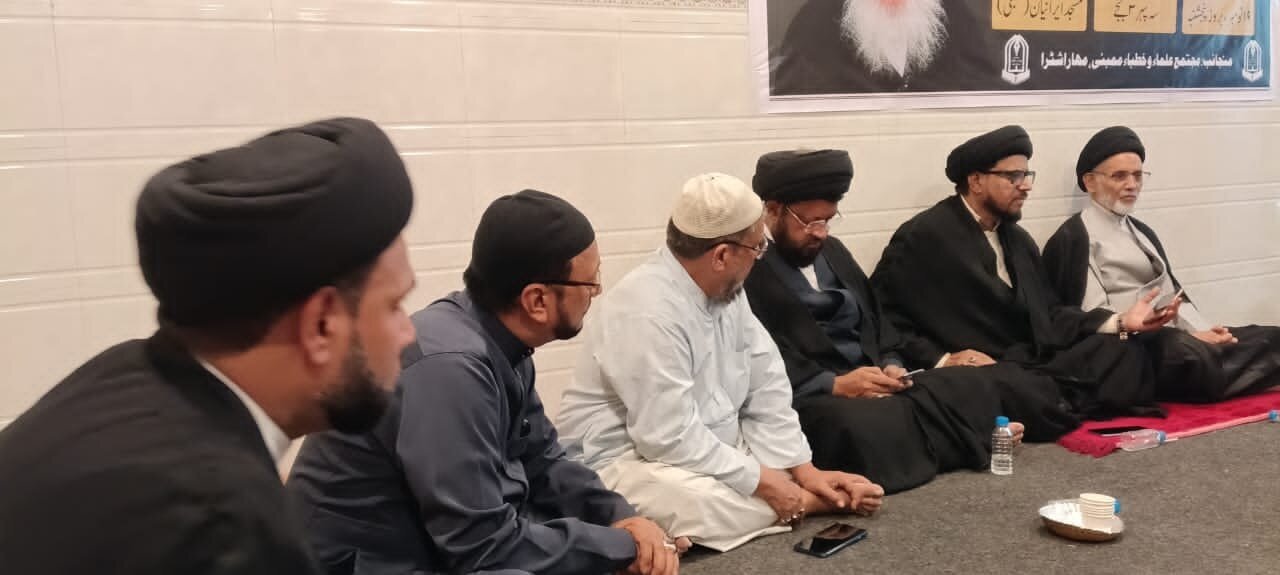
He said that Ayatollah Sheikh Wahid Khorasani's stature was well known throughout the Shia world. Scholars and intellectuals recognised him for his exceptional academic and jurisprudential abilities, while the general public knew him as a religious authority who had devoted his entire life to serving and promoting the faith of Prophet Muhammad (PBUH) and his Ahlul Bayt (AS).
He added that the late scholar had always been at the forefront of practically demonstrating reverence for the symbols of faith. His role in promoting the observance of Ayyam-e-Aza-e-Fatimiya, the days commemorating the martyrdom of Hazrat Fatima Zahra (SA), and spreading its message throughout the world had been particularly significant.
Maulana Isfahani further recalled that despite his advanced age and physical frailty, Ayatollah Wahid Khorasani would walk from his office to the holy shrine of Hazrat Fatima Masumeh (SA) on the anniversary of her martyrdom and participate in the mourning procession. He described this practice as a powerful expression of the late scholar's profound devotion and love for the Lady of the Two Worlds, Hazrat Fatima Zahra (SA).
The session's host also recited an excerpt from one of the late scholar's speeches, in which he had quoted an important hadith while explaining the exalted status and greatness of Hazrat Fatima Zahra (SA), dedicating its spiritual reward to the deceased.
Following this, Maulana Syed Ghulam Askari, Friday prayer leader in Kurla, paid tribute to the eminent mujtahid and shared his reflections.
He described Ayatollah Wahid Khorasani's services to the Shia faith as a great legacy and a significant contribution to the Muslim community. He said that people should not limit their tributes to condolence gatherings and written appreciations, but should make serious efforts to communicate the late scholar's intellectual and religious contributions to the wider public. Such efforts, he added, would not only strengthen the standing of religious authority but also deepen public understanding and respect for the institution of Marja'iyyat and the position of senior religious authorities.
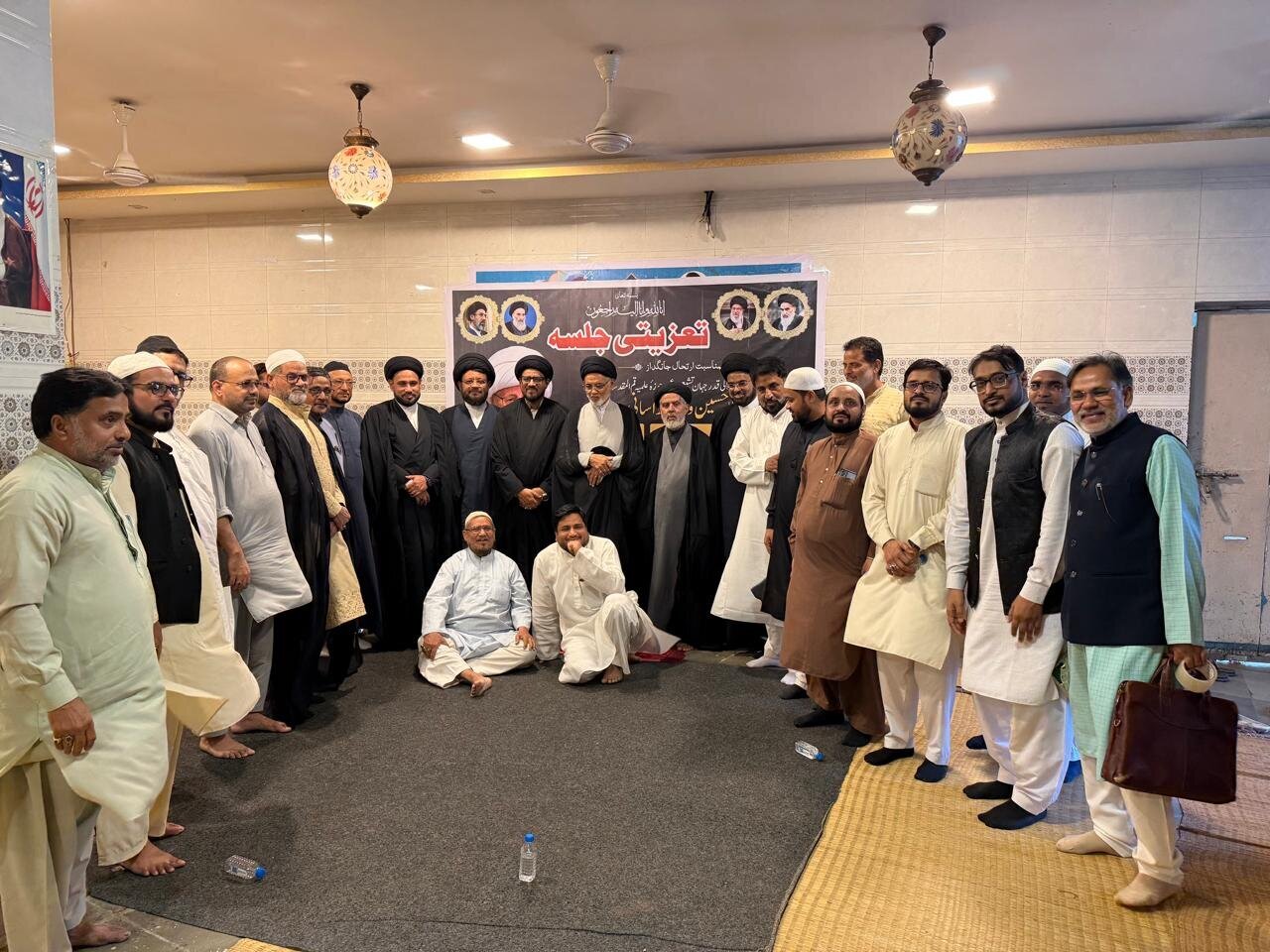
Prominent Mumbai-based orator and religious scholar Maulana Syed Aziz Haider also spoke at the gathering. He said that, by the grace of God, people today were aware of the sacrifices and services of this distinguished religious authority. Even individuals belonging to different intellectual and ideological traditions acknowledged his scholarly and religious contributions, which, he said, demonstrated the breadth of his personality and the stature he had attained.
Maulana Syed Rooh Zafar, prayer leader of the prominent Khoja Jame Mosque in Dongri, Mumbai, also recalled Ayatollah Wahid Khorasani's scholarly and jurisprudential contributions. He said he had had the privilege of attending the late scholar's lectures in the holy city of Qom and had greatly benefited from his advanced lessons in jurisprudence and Islamic legal principles.
He noted that the late scholar's jurisprudential approach and research into the principles of Islamic law reflected the intellectual methodology and views of his respected teacher, Grand Ayatollah Sayyid Abul Qasim al-Khoei, which he had further developed in his own scholarly style.
Maulana Rooh Zafar added that, beyond his academic and jurisprudential work, Ayatollah Wahid Khorasani had also supported the Islamic Revolution on political and social fronts and remained a supporter of Imam Khomeini and Imam Khamenei.
Senior teacher and renowned religious scholar Hujjat-ul-Islam wal-Muslimeen Maulana Hussain Mehdi Hussaini also shared his reflections.
In his address, he referred to verses attributed to Imam Mahdi (may Allah hasten his reappearance), said to have been inscribed on the grave of Sheikh Mufid following his death. He quoted:
*“La sawta al-naa'iya bi-faqdika innama yawmun ala Aal al-Rasool azeem.”*
Meaning: “Let the voice of the one announcing your death not be raised, for this is a day of great tragedy for the family of the Prophet.”
Drawing a parallel with this account, he described the passing of Grand Ayatollah Sheikh Wahid Khorasani as a major scholarly and religious loss. He said the late scholar had profound love and devotion for the family of the Prophet (PBUH), particularly Hazrat Fatima Zahra (SA), and had consistently emphasised the importance of the Holy Quran and attachment to the Ahlul Bayt (AS) in his lectures.
He recalled that in one of his lessons, Ayatollah Wahid Khorasani had advised people to recite at least one Juz of the Holy Quran every day and dedicate its spiritual reward to the Imam of the Age, Imam Mahdi (may Allah hasten his reappearance). The worldly and spiritual blessings of this practice, he had said, were immense.
At the conclusion of the gathering, Maulana Syed Fayaz Baqir, president of the Association of Scholars and Orators of Mumbai, thanked all those who had attended.
He stressed the need to promote the scholarly and religious contributions, writings and ideas of Ayatollah Wahid Khorasani through Friday sermons, mourning assemblies and other religious gatherings. Such efforts, he said, would help increase public awareness and understanding of the life and standing of this eminent Marja-e-Taqlid.
The programme concluded with the recitation of Surah al-Fatiha and prayers for the elevation of the late scholar's spiritual rank and for divine mercy and forgiveness.
On the occasion, condolences were also conveyed to Imam Mahdi (may Allah hasten his reappearance), Ayatollah Sayyid Mojtaba Khamenei, the Supreme Leader of the Islamic Revolution, who was also among the late scholar's students, as well as to religious scholars, senior Maraji' and all believers and devotees of the Ahlul Bayt (AS).



Your Comment