

AhlulBayt News Agency (ABNA): The Indo-Palestine Solidarity Network and several Indian civil society representatives have urged BRICS leaders meeting in New Delhi to take collective action against Israel, including supporting boycott, divestment and sanctions, initiating its suspension from the United Nations and ending military and economic assistance that enables violations of international law.
In a letter addressed to the heads of state and government attending the 18th BRICS Summit at Bharat Mandapam on 12 and 13 September, the groups demanded an immediate and permanent ceasefire in Gaza, an end to Israeli military operations in the occupied West Bank, unrestricted humanitarian access and a complete lifting of the siege on Gaza.
The letter, dated 11 September, was sent through Prime Minister Narendra Modi, who is chairing BRICS in 2026.
The signatories said the summit’s stated focus on resilience and cooperation invokes qualities that the peoples of Palestine, Lebanon and Iran have been forced to demonstrate because the international order intended to protect them has failed.
“BRICS now represents nearly half of the world’s population, and that weight brings obligations with it,” the letter said.
It argued that the Global South cannot credibly demand a greater role in global governance while responding cautiously or remaining silent in the face of what it described as “the gravest sustained assault on international law in West Asia in living memory.”
The letter pointed to South Africa’s decision to bring a genocide case against Israel before the International Court of Justice as an acknowledgment of that responsibility by a founding member of BRICS.
“The war on Gaza has not ended,” the civil society groups said, noting that although a ceasefire was declared in October 2025, health officials in Gaza have reported that Israeli strikes have killed more than 1,270 Palestinians since then.
The letter said humanitarian access continues to be restricted, hospitals face shortages of essential medicines and the siege remains in force in practice, even if not in name.
In the occupied West Bank, the United Nations has recorded settler attacks at a higher rate than in any previous year, according to the statement. Mosques have been set on fire and thousands of Palestinian families have been driven from their land.
The groups described the developments as annexation being carried out in open defiance of the International Court of Justice’s 2024 finding that the Israeli occupation is unlawful.
The letter also addressed the war against Iran, a BRICS member, saying the impunity evident in Palestine had spread across the region.
According to the statement, the United States and Israel launched a war against Iran on 28 February 2026 and killed Iranian Supreme Leader Ayatollah Ali Khamenei on its first day.
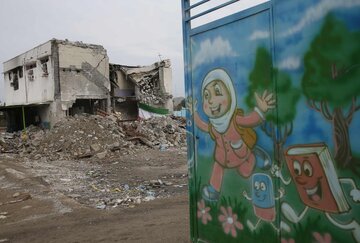
The same morning, a missile struck the Shajareh Tayyebeh girls’ primary school in Minab, killing around 165 people, most of them children, the groups said. The letter stated that Amnesty International attributed the attack to the United States.
It said ceasefires had subsequently been “announced, extended, suspended and declared over from Washington as it has seen fit,” leaving the peoples of the region hostage to decisions in which they had no voice.
The statement accused Israel of maintaining an unyielding position on Iran and repeatedly acting in ways that undermined attempts to negotiate an end to the war.
It said that on 8 April, within hours of the announcement of a ceasefire between the United States and Iran, Israel launched attacks across Lebanon that killed more than 350 people in a single day. Israeli attacks on southern Lebanon have continued despite another ceasefire announced in June, the groups added.
The letter also rejected what it called a narrative prevalent in Western capitals and much of the international media that portrays Iran as an aggressor against its Arab neighbours.
“This war was begun by the United States and Israel,” it said.
According to the groups, Iran’s retaliation targeted American military installations from which the war was being conducted, including Al Udeid in Qatar, Al Dhafra in the United Arab Emirates, Ali Al Salem in Kuwait and the headquarters of the United States Fifth Fleet in Bahrain.
The letter acknowledged that civilians in the Gulf, including several South Asian migrant workers, were also killed.
“We mourn them as we mourn the dead of Minab and Gaza,” it said.
The groups argued that those deaths constituted an argument against foreign military bases that turn host countries into battlefields and could not be used to justify the war that led to the missile attacks.
The Indo-Palestine Solidarity Network called on BRICS to support boycott, divestment and sanctions against Israel until it ends its occupation, apartheid policies and violations of Palestinian national and human rights.
It urged the grouping to collectively initiate Israel’s suspension from the United Nations until it complies with international law, ends the occupation and implements relevant UN resolutions. The letter cited the UN General Assembly’s action against apartheid South Africa in 1974 as a precedent.
The groups also asked BRICS to take the lead in initiating negotiations for a just and comprehensive political solution.
Such negotiations, the letter said, must not once again be controlled by the United States and its Western allies, whose support has sustained Israeli impunity. It stressed that Palestinians must be central to every decision concerning their future.
BRICS should also play a major role in developing a comprehensive regional settlement that addresses Palestine, Lebanon and Iran together, as well as the broader consequences of Israeli and Western military intervention in West Asia, the statement said.
The groups argued that the war against Iran and the attacks on Lebanon were part of the same project that sustains the occupation of Palestine: “the pursuit of unchallenged military dominance over West Asia.”
They urged BRICS to condemn aggression against Iran, a fellow member of the grouping, and violations of Lebanese sovereignty.
The letter also called on BRICS to reject all regime-change policies, press for an independent international investigation into the Minab school strike and other attacks on civilians, and insist that any ceasefire be multilateral, binding and inclusive of Lebanon instead of being open to unilateral revision.
BRICS countries should end military and economic support for Israel by halting the supply of arms, military technology and other assistance that enables its continuing violations of international law, the groups said.
The letter made a particular appeal to BRICS members from West Asia and the Arab world, naming Iran, Egypt and the United Arab Emirates.
It said the three countries live closest to the consequences of the war and have borne its costs in lives, trade and security.
“Their voices for justice in Palestine and against the militarisation of the region carry a weight that others cannot match,” the letter said, urging them to support a collective position grounded in international law.
The groups also criticised India’s position, particularly as it chairs the summit.
The letter recalled that India had supported the Palestinian struggle for self-determination for decades. However, it said India’s growing military, economic and political relationship with Israel, maintained throughout the destruction of Gaza, had made it complicit in Israel’s continuing crimes.
It cited Article 51 of the Indian Constitution, which directs the State to promote international peace and security and foster respect for international law.
As the host of the summit, India has an opportunity to return to an independent foreign policy rooted in its constitutional commitments and anti-colonial tradition, the groups said.
“The present moment demands more than expressions of concern in a closing declaration,” the letter said.
It argued that BRICS possesses the collective political and economic strength required to challenge the structures of impunity that have protected Israel for decades and advance a settlement founded on equality, freedom, self-determination and an end to occupation and apartheid.
“We urge you to act, and not merely to speak, for Palestine and for all the peoples of West Asia,” the letter concluded.
The letter was signed by Dr John Dayal, Dr Ranjan Solomon, Maimoona Mollah, Vineet Tiwari, Dr Joycia Thorat, Sr. Liza, advocate Anastasia Gill, Shalini Merrill, Dr Jaya Mehta, Bhavna Sharma and Ishu on behalf of the Indo-Palestine Solidarity Network.



Your Comment