

AhlulBayt News Agency: Ayatollah Seyyed Mojtaba Noormofidi, a senior lecturer in advanced jurisprudence and principles of jurisprudence at the Qom Seminary and head of the Research Institute of Contemporary Fiqh Studies, has stressed the need for religious scholars to understand global developments and address emerging issues through independent Islamic jurisprudential reasoning.
“If we fall short or remain unaware, others will determine the boundaries of people’s lives,” he warned.
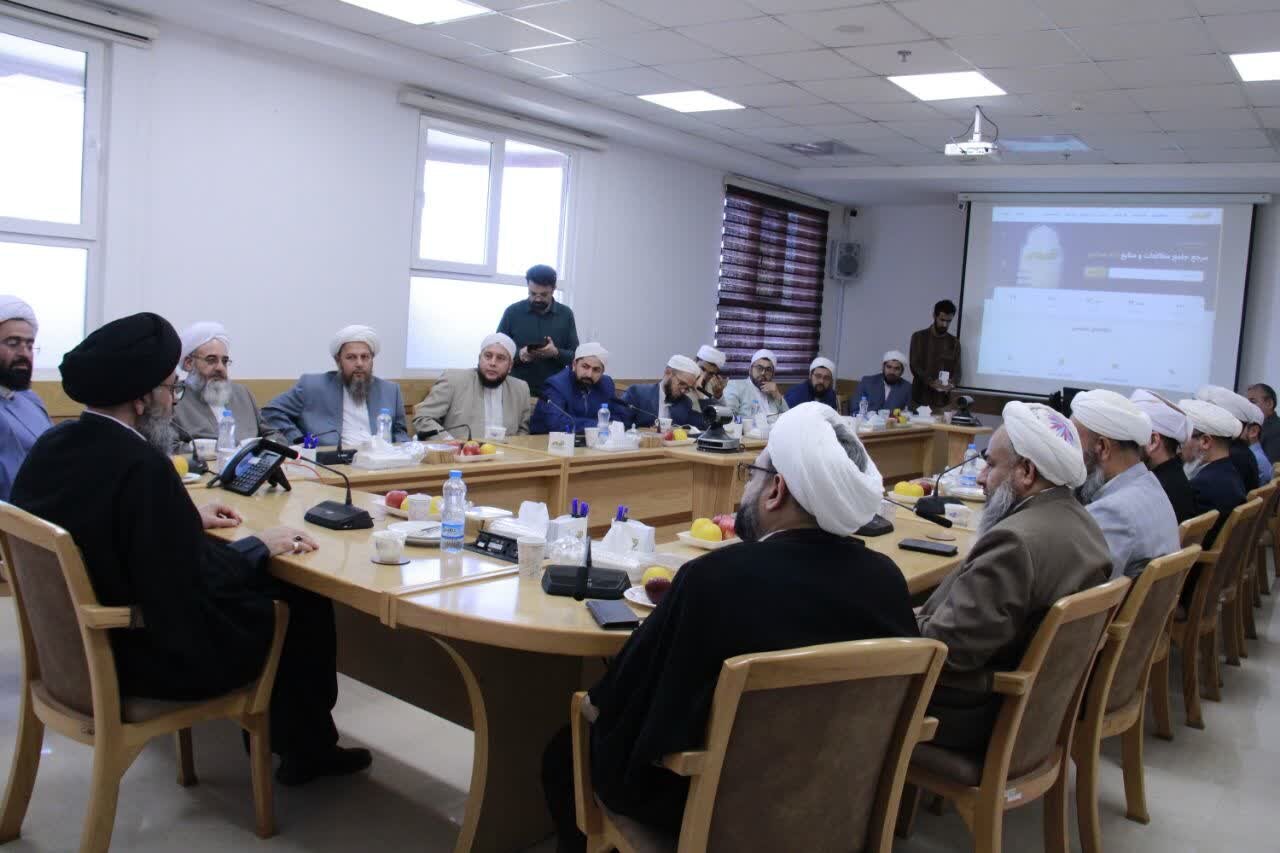
Speaking at a meeting with a group of Sunni scholars and intellectuals from Iran’s Golestan Province, Noormofidi referred to his longstanding ties of affection and friendship with the people of Turkmen Sahra, describing the relationship as rooted in mutual respect and shared understanding. He said he was pleased to meet with scholars from the region.
Ijtihad: A Necessity for Addressing the Challenges of the Modern World
The head of the Research Institute of Contemporary Fiqh Studies described engagement with contemporary jurisprudence as an essential responsibility of religious seminaries and clerics in the Muslim world.
He explained that contemporary fiqh is not limited to addressing newly emerging issues. It also involves reconsidering rulings on longstanding matters in light of new realities and developments.
Referring to the vast and constantly changing range of human concerns, alongside the finite nature of religious texts, Noormofidi emphasised the central role of ijtihad, or independent Islamic legal reasoning, in responding to new needs.
“We live in a world where, in ordinary terms, the issues are virtually unlimited, while our religious texts are finite,” he said.
He added that ijtihad is the only way to address emerging questions while preserving the framework of Islamic law. However, he stressed that contemporary ijtihad requires new tools and capabilities that both Shia and Sunni religious scholars must acquire.
Noormofidi described protecting people's religious commitment and preserving the principles of Sharia in their daily lives as fundamental responsibilities of religious scholars.
“Preserving people's faith is essential, and safeguarding the framework of Sharia in their lives is our responsibility. Ijtihad is responsible for protecting the boundaries of this framework, and today's world requires tools with which Shia and Sunni scholars must equip themselves,” he said.
Warning against overlooking global developments and emerging challenges, he reiterated: “If we fall short or remain unaware, others will determine the boundaries of people's lives.”
The Two Pillars of Ijtihad: Religious Texts and Understanding Contemporary Realities
Explaining the requirements of ijtihad in the modern era, Noormofidi identified two essential capabilities for Islamic jurists: mastery of religious texts, principles and jurisprudential rules, and a thorough understanding of contemporary realities.
He said scholars must, on the one hand, preserve and properly understand the intellectual legacy of earlier generations, religious texts and established principles. On the other hand, they must remain informed about people's changing circumstances and developments in the modern world. Neglecting either dimension, he warned, could lead to excess or deficiency in the process of ijtihad.
He also highlighted the consequences of failing to address the needs of younger generations. Insisting on the outward meaning of religious texts without considering contemporary realities, he said, could make religious guidance ineffective and alienate large sections of society. Conversely, ignoring religious principles and changing circumstances could lead to intellectual stagnation.
Referring to situations in which people may feel forced to choose between their way of life and their religious commitments, he said: “We can show people the right way to live through the richness of our own jurisprudence and Sharia.”
He described knowledge of fiqh, Quranic teachings, exegesis, hadith and established religious principles as one pillar of ijtihad, while understanding contemporary realities constitutes the other. Both, he said, are indispensable for responding to society's needs.
The Role of Time and Place in Ijtihad
Addressing the influence of time and changing circumstances on Islamic legal rulings, Noormofidi said the impact of temporal conditions cannot be denied, but it must be understood and applied according to established principles.
He clarified that taking account of time and new developments does not mean revising the sources of religion or changing methods of legal deduction without clear criteria. Rather, it requires accurately identifying the subject matter of rulings, the conditions under which they apply, and the underlying reasons and criteria behind them.
He explained that changes in the nature of a subject, its circumstances or the scope of its practical applications can affect the ruling associated with it. Recognising these changes, he said, is therefore an important part of ijtihad.
As an example, he referred to the revival and cultivation of barren land and the differences between people's capabilities and resources in the past and present.
He questioned whether general narrations concerning the revival of land could be applied in exactly the same way without considering modern economic conditions, new technologies and contemporary social arrangements. The circumstances in which religious narrations were issued, he said, can influence how their scope and implications are understood.
Noormofidi also highlighted the need to consider the rights of others, public resources, the role of government and responsibilities towards future generations, particularly given the expansion of modern technologies that allow large areas of land to be developed in a short period.
Summing up his position, he said the approach must remain grounded in authentic jurisprudential sources and established methods of legal reasoning.
“What is necessary is a precise understanding of the subjects and the changing realities of contemporary life, followed by deriving rulings appropriate to those circumstances. New issues must be examined using the same authentic sources, frameworks, principles and jurisprudential rules, while drawing on the scholarly methods of earlier religious authorities,” he said.
Contemporary Fiqh as Common Ground for Islamic Unity
Noormofidi described contemporary jurisprudence as an important area for academic cooperation between Shia and Sunni scholars and a valuable means of strengthening rapprochement among Islamic schools of thought.
Referring to the activities of the Research Institute of Contemporary Fiqh Studies, including its work on emerging jurisprudential questions and the organisation of conferences and joint academic sessions with Sunni scholars from different countries, he said contemporary fiqh could provide common ground for scholarly dialogue and greater understanding between Islamic traditions.
He also referred to the scholarly work of Sunni religious authorities in the field of *fiqh al-nawazil*—jurisprudence concerning new and unprecedented issues—and stressed the importance of expanding these efforts and encouraging scholars to look beyond regional concerns.
He said the responsibilities of religious scholars extend beyond the present generation. They must also consider the challenges facing future generations and the wider Muslim world, using the intellectual resources of religion, fiqh, the Quran and hadith to address them.
Noormofidi further emphasised the importance of joint academic meetings between Shia and Sunni seminaries, describing such exchanges as opportunities to strengthen knowledge, broaden perspectives and improve understanding of contemporary intellectual and scientific developments. He called for these collaborations to continue and expand.
Addressing Emerging Issues: From Cryptocurrencies to Ownership of Natural Resources
During the meeting, Noormofidi also responded to questions from participants about contemporary jurisprudential issues, including cryptocurrencies.
He explained his views on the permissibility of cryptocurrency mining and trading and examined some of the objections raised in this regard.
Emphasising the need to analyse the nature of financial transactions and carefully examine the relevant jurisprudential evidence, he said scholars must distinguish between the primary ruling on an issue and secondary considerations arising from particular circumstances, such as foreign domination or external interference.
In response to another question concerning the cultivation of barren land and ownership of natural resources, he highlighted the role of government and the legal system in managing public resources. He said contemporary conditions, differences in individual capabilities, public rights and obligations towards future generations must all be considered when examining such matters.
Sunni Scholars Call for Continued Academic Cooperation
At the beginning of the meeting, Dr. Deilam, head of the Islamic Centre of Golestan Province, introduced a delegation of Sunni scholars and intellectuals from the province who are active in Quranic exegesis and related sciences.
He said their academic visit to Qom was intended to benefit from the expertise of prominent scholars, visit research centres and universities, and expand the exchange of knowledge and experience.
Referring to Noormofidi's academic standing and the research institute's work on contemporary jurisprudential issues and the needs of the Muslim world, Deilam called for broader cooperation between the institute, specialised Sunni institutions and research centres in Golestan Province.
He identified academic exchanges, joint in-person and online meetings, and the use of the institute's research and publications as important areas for collaboration.
Deilam also highlighted Noormofidi's role in promoting unity and mutual understanding between Shia and Sunni communities in Golestan, stressing the importance of maintaining and expanding these ties.
At the conclusion of the meeting, participants expressed appreciation for the scholarly discussions and emphasised the need to continue joint academic gatherings and dialogue between Shia and Sunni scholars, making use of their shared intellectual resources to address the challenges facing the Muslim world.




Your Comment