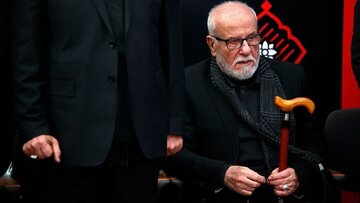
AhlulBayt News Agency (ABNA): Hojat al-Islam Sheikh Ali al-Khatib, Vice President of the Supreme Islamic Shia Council of Lebanon, hosted Jeanine Hennis-Plasschaert, the UN Special Coordinator for Lebanon, at the Council's headquarters in Al-Hazmiyeh. During the meeting, the situation surrounding Lebanon in light of Israeli aggressions was examined, and the UN official raised several issues, including "the possibility of inviting internal dialogue in Lebanon under UN supervision, particularly among religious leaders, as well as Lebanon-Syria relations."
Sheikh al-Khatib emphasized during the meeting that steps are being taken to hold a meeting with the participation of religious figures to reduce internal tension and prevent any strife that Israel seeks to ignite.
He noted, "We agree to dialogue, and we hope that President Joseph Aoun will call for such a dialogue, with a national defense strategy at the core of these discussions."
The Vice President of the Supreme Islamic Shia Council stated, "It is important for us that the UN be active and play a significant role in our affairs, but unfortunately, even the UN has not been spared from Israeli aggressions."
Expressing astonishment, he said, "How does Israel have a seat at the United Nations, while its prime minister stands and displays an image of 'Greater Israel' and declares its aggressive objectives? This is not a government; it is a gang formed on the basis of crime and corruption. As long as they operate with such a mindset, there will be no peace in the region."
Sheikh al-Khatib added, "Israel assassinated journalist Amal Khalil, and she is not the first victim among journalists; before her, martyrs such as Ali Shoeib, Fatima, and Mohammad Fatouni were targeted. These are clear war crimes that the UN must condemn."
He emphasized, "We will not allow ourselves to be drawn into internal strife, which Israel desires, in order to achieve objectives it has failed to attain militarily and politically. The Lebanese experienced 15 years of civil war and achieved nothing. There are wise people in Lebanon who oppose internal conflict, although there are some aberrant voices, but the voice of the wise is stronger."
The Vice President of the Supreme Islamic Shia Council of Lebanon also emphasized, "We seek the best relations with the Lebanese government, especially with the President, and we reject any insult or threat against him, because we are committed to the office of the presidency. It is in our interest for the Lebanese government to be strong and capable of protecting its sovereignty and defending its people, so as to reduce many sacrifices and sufferings."
Sheikh al-Khatib concluded by noting, "We also seek the best brotherly relations with Syria and our Syrian brothers. There are fraternal ties between the Syrians and us, and past problems were the result of internal Syrian differences. We want the relations between the two countries to be regulated within the framework of governments, and recently, a number of issues have been addressed in this framework."
**************
End/ 345E