
AhlulBayt News Agency (ABNA): Texas Muslims, on the eve of the US midterm elections, with the rise of Islamophobia and policies that, according to them, target their religious rights and identity, are trying to respond to anti-Islamic currents through electoral participation.
According to this report, although this state has no Muslim candidate in statewide races, Muslims believe the election result can have a direct impact on social security, religious freedoms, and the future of their families.
Republican anti-Islamic policies; from banning Sharia to pressure on Muslim institutions
In recent years, Texas Republican politicians, by raising claims about the threatening nature of Islamic Sharia, have inflamed the state's political atmosphere against Muslims. Greg Abbott, the governor of Texas, at a Republican Party election meeting, has promised to completely ban the implementation of Islamic Sharia in this state. Ted Cruz, the Republican senator, has also claimed that Sharia is incompatible with the US Constitution and must be confronted.
The Texas Republican Party in June approved a document titled "Do Not Make Texas Islamic," in which criminal punishment, deprivation of certain public jobs, and even denaturalization and deportation for supporters of implementing Sharia are proposed. Also, a number of state legislators and US congressmen have joined this current by forming groups titled "Texas Free of Sharia" and "America Free of Sharia"; this comes as no state or jurisdiction in America has recognized the implementation of Islamic laws.
At the same time, political pressures against Islamic institutions have also increased. The Texas governor has set out to designate the Council on American-Islamic Relations (CAIR) in this state as a foreign terrorist organization, and Ken Paxton, the Texas attorney general, has also filed a lawsuit seeking to stop this institution's activities. In contrast, the Texas branch of this council, by filing a complaint against the governor, has considered his actions contrary to freedom of expression and its legal rights. These developments have increased Islamic organizations' concerns about the restriction of Muslims' civil and social activities.
Muslim families' concern about the normalization of Islamophobia in society
Al Jazeera's report shows that the consequences of this political atmosphere are not limited to party competitions and have also found their way into the daily lives of Muslim families. Samir Najam, a Muslim lawyer living in Houston, says his main concern is the impact of this negative atmosphere on his children; children who interact with their peers in schools and may face discriminatory behavior under the influence of the media atmosphere and the positions of other families.
Maryam Ahmed, a 42-year-old Muslim physician, also, referring to social pressures against Muslims, has said that in the past two years she has even thought about leaving America. She is worried that her child may face the label of terrorism because of being Muslim. Meanwhile, some civil rights activists have emphasized that politicians, by exaggerating limited and specific cases, present Muslims' normal participation in social, economic, and civil activities as a threat to American society.
Mobilization of mosques and Islamic institutions to increase electoral participation
In reaction to these conditions, Texas Islamic organizations have tried to increase this community's social and political power by expanding voter registration programs and encouraging Muslims to participate in elections. The Islamic Society of Greater Houston, which oversees the activities of more than 30 mosques, has expanded voter registration programs this year, and religious leaders have also emphasized the necessity of political participation in Friday prayer sermons. This institution has announced that it does not support a specific candidate and asks Muslims to vote based on their own judgment and conscience.
Nevertheless, Muslim activists believe that turning social dissatisfaction into broad political participation is still accompanied by difficulties, because the Texas Muslim community is made up of different ethnicities and languages and cannot cover all groups with a single method of communication. The approval of Texas schools' new curriculum about Islam has also become another axis of protest; critics say this curriculum places disproportionate emphasis on the concept of "radical Islam" and presents an incorrect image of the Prophet of Islam (p.b.u.h).
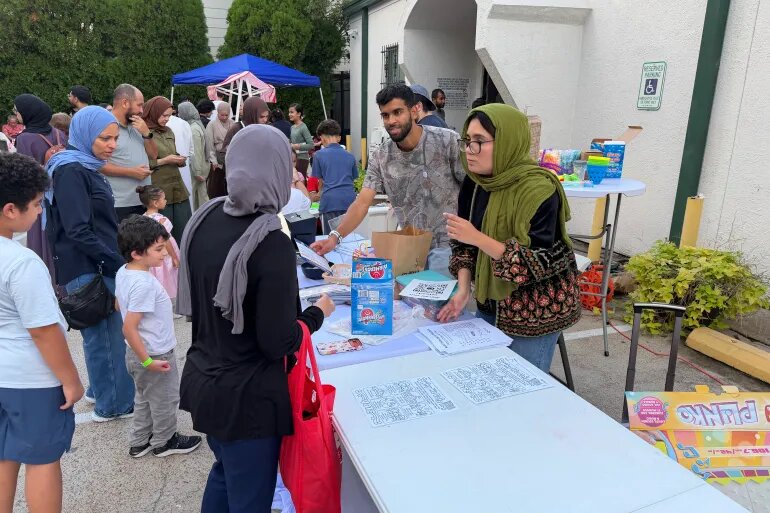
In this regard, activists of the Council on American-Islamic Relations at Muslim social and cultural gatherings, including a festival at the Houston Islamic Center, have been raising awareness about the importance of voting. Samiha Razavi, the director of legislative affairs and government relations of this organization, believes that silence against discrimination and refraining from presence in the public arena cannot change the conditions. Emphasizing the role of elections in creating a safer environment for Muslim families, she has asked citizens to use their right to vote to influence state policies.
**************
End/ 345E



