
(AhlulBayt News Agency) - Up to 500,000 civilians in Mosul are facing a "catastrophic" drinking water shortage, the UN warned on Wednesday, as Iraqi forces advance against the ISIS terrorist group in the city.
Already suffering from a severe lack of food and electricity, civilians in Iraq's second city are now also running out of drinkable water, said Lise Grande, UN humanitarian coordinator in Iraq.
"Nearly half a million civilians, already struggling to feed themselves day to day, are now without access to clean drinking water. The impact on children, women and families will be catastrophic," Grande said.
Tens of thousands of Iraqi troops and allied forces launched an offensive last month to retake Mosul, which was seized by ISIS more than two years ago.
Weeks of fighting have seen the Iraqi forces surround the city and break into its eastern neighbourhoods, where there have been heavy street-to-street battles with the terrorists.
Operations to retake the city have damaged water pipes in recent days and residents in east Mosul say they have resorted to pumping water from wells.
"We don't have water or electricity. We are drinking well water but that's not enough," said Mosul resident Mohamed Khalil, 25.
"Water is the most important thing. We aren't washing. We are going to catch lice and our homes are filthy," said Iman Baker, a 34-year-old mother of three who lives in an eastern neighbourhood recently retaken from ISIS.
Since the launch of the assault on October 17, more than 70,000 people have fled the fighting, but more than a million people are estimated to remain in the city, including around 600,000 in the eastern neighbourhoods.
Abdelkarim al-Obeidi, the secretary general of the local civil society organisation Mosul People Gathering, warned of a "humanitarian disaster" in the making.
"The government as well as aid organisations must step up and offer assistance to the people, especially those families forced to drink water from the wells that is not fit for drinking," he said.
At a hospital in the village of Gogjali on the eastern outskirts of Mosul, a medical source said civilians were starting to arrive with "cases of diarrhoea and intestinal cramps, especially among children".
Abu Ali, a resident of eastern Mosul, said he hoped running water would return before an outbreak of disease.
Some residents "will take water from the Tigris", he said, referring to the river that divides the city.
Basma Basseem, an official with the Mosul municipality, suggested that ISIS may have intentionally stopped the flow.
"There are efforts to bring water tankers to neighbourhoods that have been retaken," Basseem said.
Residents said that many were also running out of food supplies and relying on aid distributed by Iraqi forces.
"Some people had stocks of dried goods but food is starting to run out, and we have neither water, nor electricity, nor fuel for heating," said 54-year-old Natiq, who was receiving food aid at a distribution centre in the eastern neighbourhood of Khadraa.
Iraqi commanders say around 40 percent of the eastern half of Mosul has been retaken in the offensive.
The forces have told civilians to stay at home in order to avoid massive displacement from the city.
/257
1 December 2016 - 12:41
News ID: 795345
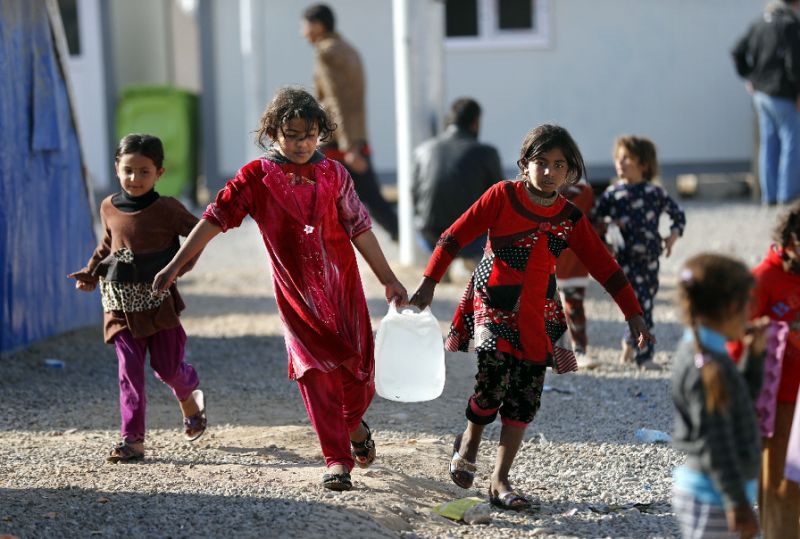
Up to 500,000 civilians in Mosul are facing a "catastrophic" drinking water shortage, the UN warned on Wednesday, as Iraqi forces advance against the ISIS terrorist group in the city.



