

ABNA24 - 2,537 West Bank schools opened their doors this Sunday morning to about 846,000 male and female students, signaling the start of the 2026-2027 school year, but the students’ return to their desks does not mean that the road to school has become safe or that education is no longer targeted.
At a time when the school year began in most governorates of the West Bank and occupied Jerusalem, students in the town of Aqaba north of Tubas were deprived of returning to their schools, after the start of the educational process there was postponed against the backdrop of the aggression to which the town was subjected to.
In Nablus, Israeli occupation forces stormed Huwara and Burqa schools, leading to the disruption of classes for hours, in a scene that reaffirms that the Palestinian school year begins this time too under the weight of raids and military restrictions.
About 846,000 male and female students are trying to attend their government, private, and UNRWA schools regularly, amid an educational reality in which risks are increasing, especially in areas where schools face threats of demolition or closure, or are located close to settlements and military checkpoints.
School threatened with demolition
In marginalized areas under occupation control, school does not seem to be merely a place for education, but turns into a symbol of resilience in the face of policies aimed at forcing residents to leave.
Palestinian schools in various parts of the West Bank, particularly in areas classified as C, face demolition orders or threats of removal under the pretext of not obtaining building permits issued by the occupation authorities, at a time when it is difficult for Palestinians to obtain those permits.
The matter gains its danger in Bedouin and rural communities, where the school represents the nearest educational point for children, while its demolition or closure means students will be forced to travel longer distances to reach other schools, which weakens their regular attendance in education, especially younger children.
In the Tubas and Northern Jordan Valley Governorate, the Directorate of Education chose Atoof Mixed Primary School to open the school year, in a message carrying significance beyond the educational occasion itself, as the school is located in an area subject to continuous targeting and attempts to push its residents to leave their land.
Director of Education in Tubas Azmi Balawneh says that choosing Atoof School came as a challenge school, referring to the continuation of the educational process despite the conditions facing the region.
More than 15,000 male and female students in the Tubas and Northern Jordan Valley Governorate are joining their schools at the start of the new year.
Education in the face of raids
Challenges are not limited to the risk of school demolitions, as military raids and attacks on students and teachers constitute an additional factor threatening the regularity of the educational process.
On the first day of the school year, the storming of Huwara and Burqa schools in Nablus Governorate and the disruption of classes for hours provides an example of what students and teachers face in various areas of the West Bank, where checkpoints, raids, and closures can turn into daily obstacles to reaching schools.
Students are not the only ones paying the price for these conditions; teachers also find themselves facing closed roads, checkpoints, and delays in reaching their workplaces, while schools located in tension areas are forced to deal continuously with the possibilities of evacuation or class disruption.
According to the Ministry of Education, more than 54,000 male and female teachers supervise the educational process in the West Bank and occupied Jerusalem, including 40,747 in government schools, 11,578 in private schools, and 1,871 in UNRWA schools, totaling 54,196 male and female teachers.
The number of students in government schools reaches 634,294 male and female students distributed over 1,967 schools, while private schools include 163,787 male and female students in 480 schools, whereas 48,208 students receive their education in 90 schools belonging to UNRWA.
Despite the magnitude of these numbers, the reality of schools is not uniform, for while city schools start their academic year relatively normally, students in marginalized areas face challenges related to reaching schools, demolition threats, raids, road closures, and settler attacks, in addition to difficult economic conditions that increase the burdens on Palestinian families.
School in these areas becomes part of the battle for survival itself; its presence means children remain close to their communities, while its continued operation represents a practical refusal to turn education into an additional factor pushing families to leave their areas.
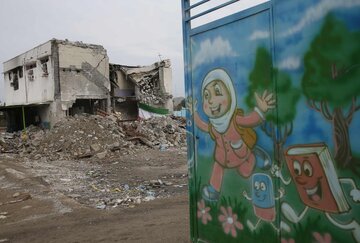
Gaza: Efforts amid the rubble of war
In the Gaza Strip, the school year does not begin in conditions similar to the West Bank. The Ministry of Education announced that the work of administrative and teaching staff will begin on September 16, with students joining education on the 19th of the same month.
The ministry is preparing to provide about 700 in-person educational points and 25 temporary schools, alongside the continuation of virtual education for students unable to access in-person education, allowing about 541,000 male and female students to continue their education according to available resources.
Thus, the opening of the school year in Palestine does not seem to be merely a date on the educational calendar; in many areas, reaching school itself becomes a challenge, and maintaining an existing school, or keeping its doors open to children, becomes part of the Palestinians’ battle to preserve their right to education and to remain on their land.
/129



Your Comment