AhlulBayt News Agency (ABNA): Mohammad Hossein Mokhtari, the Ambassador of the Islamic Republic of Iran to the Vatican, in an interview with the Italian newspaper Il Fatto Quotidiano, elaborating on the dimensions of the U.S. military aggression against Iran and the targeting of infrastructure, educational and medical centers, and civilian areas, emphasized, "The attack amid the negotiation process is a clear betrayal of diplomacy and a violation of the UN Charter."
He called on the international community to take a firm stance against these crimes and warned that future agreements cannot be based solely on trust in Washington and must be accompanied by objective guarantees, binding commitments, and verification mechanisms.
The full text of this interview is as follows:
Your Excellency, why do you believe that diplomacy has been betrayed?
We attach great importance to diplomacy, and dialogue has always been considered a necessity. However, unfortunately, diplomacy has been openly betrayed. An attack during a negotiation process is neither legally nor morally justifiable. This shows that some actors can simultaneously use negotiation and military pressure to advance their interests.
What does this mean for the credibility of international diplomacy?
This action violates the principle of the prohibition of the use of force, which is stipulated in Article 2, paragraph 4 of the UN Charter, and also undermines the principle of peaceful settlement of disputes. Therefore, agreements cannot be based solely on trust but must be supported by guarantees and verification mechanisms.
Can diplomacy still be based on trust between states, or does it need guarantees and verification mechanisms?
International relations are not based on absolute moral trust but are built on power, interests, and calculation—a logic explained by thinkers such as Thomas Hobbes and Hans Morgenthau. In such a framework, trust cannot be absolute but must be conditional and verifiable.
Hence, agreements must be accompanied by verification mechanisms, enforcement guarantees, and a balance of power. Diplomacy remains an undeniable necessity, but without practical tools, even the most important agreements may become vulnerable.
In light of recent developments, do you still believe it is possible to reopen a dialogue channel between Tehran and Washington? What conditions are necessary to prevent the escalation of tensions?
From the perspective of the Islamic Republic of Iran, the issue of trust in the U.S. government is not merely a political or emotional perception but is based on a set of historical experiences. Iran believes that over the past decades, the United States has on numerous occasions failed to fulfill its commitments or has revised previous agreements with changes in administrations and political priorities.
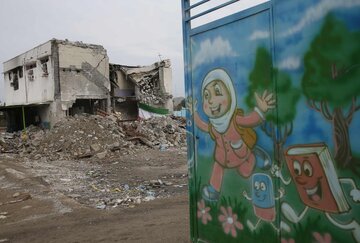
In Iran's political discourse, examples such as U.S. support for the Pahlavi regime, support for Iraq during the imposed war, the imposition of extensive sanctions after periods of negotiation, and particularly Washington's unilateral withdrawal from the JCPOA nuclear agreement in 2018, as well as the clear aggression against our country in violation of the UN Charter while we were engaged in negotiations—an aggression that led to the martyrdom of the Supreme Leader of the Islamic Revolution and his family, a number of officials, and many innocent civilian citizens, including the martyrdom of 168 young students of the Shajareh Tayyibeh Elementary School in Minab during the second aggression—are cited as evidence of the difficulty of placing lasting trust in U.S. commitments.
Accordingly, we believe that merely signing an agreement does not guarantee its long-term implementation, and practical mechanisms must be in place to ensure commitments.
Based on this historical experience, the Islamic Republic of Iran emphasizes the principles of "verification" and "obtaining objective guarantees" in international negotiations and interactions. From Iran's perspective, international relations should not be based solely on trust in political promises but must be founded on binding legal commitments and measurable mechanisms. Therefore, Iran's foreign policy seeks to strike a balance between the principle of negotiation and cooperation on the one hand, and caution against the possibility of breached commitments on the other.
Do you view the confrontation between Iran and the United States solely as a regional dispute, or do you consider it a reflection of a broader transformation in the international order?
The Iran-U.S. confrontation cannot be seen merely as a regional dispute over influence in West Asia, the nuclear program, or security arrangements in the Persian Gulf, although these issues constitute an important and immediate part of the conflict. At the regional level, the disagreement between the two countries relates to issues such as U.S. military presence, Washington's support for the usurping Zionist regime, economic sanctions, energy security, and different definitions of a desirable Middle East order.
The United States seeks to maintain a structure in which its allies are the main axis of the balance of power, while Iran emphasizes the strategic independence of regional countries, the reduction of extra-regional powers' presence, and the formation of indigenous security arrangements. From this perspective, the Iran-U.S. conflict is a clash of two different conceptions of security and regional power.
But at a deeper level, this confrontation should be viewed as part of the broader transition from the post-Cold War unipolar order to a pluralistic, multipolar order. Therefore, in this transition, Iran is not just a regional power but, on a different scale, a symbol of resistance against hierarchical and unilateralist orders.
Can Iran's nuclear issue be separated from the broader regional security system of the Middle East?
Iran has repeatedly stated in its official positions that its nuclear program is purely peaceful in nature and is pursued within the framework of scientific, industrial, medical, and energy needs. From the perspective of the Islamic Republic of Iran, nuclear technology is one of the scientific achievements of the Iranian nation, which can play a role in electricity generation, disease treatment through radiopharmaceuticals, agricultural development, water resource management, and the advancement of modern technologies.
Iran emphasizes that the peaceful use of nuclear energy is a right recognized under the Non-Proliferation Treaty (NPT) for all member states, and Iran considers itself committed to exercising this right within the framework of international laws and regulations.
Furthermore, Iran also emphasizes its religious and ethical foundations. The Islamic Republic has repeatedly declared that the production, stockpiling, and use of weapons of mass destruction, including nuclear weapons, are religiously and morally prohibited.
The fatwa of the martyred leader of the Islamic Revolution, Imam Khamenei (r.a.), and also the current Supreme Leader of the Islamic Revolution, Grand Ayatollah Sayyid Mujtaba Khamenei, on the prohibition of nuclear weapons is cited in this context. Therefore, Iran argues that its defense and security strategy is based on conventional deterrence, indigenous defense capabilities, and regional security, rather than the acquisition of nuclear weapons. Based on this view, Iran's nuclear program should be assessed as a scientific and developmental program, not a plan for the production of nuclear weapons and weapons of mass destruction.
Where is the line between diplomatic neutrality and the moral duty to condemn injustices?
Diplomatic neutrality does not mean moral indifference, but rather maintaining the possibility of dialogue, avoiding hasty judgment, and striving for fair mediation between conflicting parties. A government, international body, or mediator can be considered neutral when it listens to the interests and claims of all parties and does not act in a biased manner in the dispute resolution process. However, neutrality toward parties should not mean neutrality toward principles. Respect for human life, human dignity, the prohibition of aggression, the protection of civilians, and the observance of justice are values that cannot be overlooked in the name of political expediency.
The line between diplomatic neutrality and unethical silence lies where there is clear and reliable evidence of aggression, the killing of civilians, organized discrimination, or the gross violation of human rights. In such circumstances, silence may effectively serve the powerful party to the detriment of the victims. Responsible diplomacy must be able to explicitly condemn unjust actions without spreading hatred—that is, to distinguish between condemning behavior and completely severing relations with a political actor. Thus, a morally conscious diplomat remains neutral in his relations but does not remain neutral in the face of oppression, aggression, and the humiliation of human dignity.
In a situation where traditional diplomacy appears to be weakened, what role can the Vatican still play in the Middle East crisis?
Vatican diplomacy can help prevent political conflicts from turning into identity or religious conflicts. The Vatican can play the role of a moral and communicative facilitator—that is, keep dialogue channels open, provide the ground for dialogue among various parties, and call on the international community to uphold human dignity and respect international law.
The Vatican's power is not in directly stopping wars, but in creating space for dialogue, mediation, and strengthening understanding among conflicting parties.
What lesson should the international community learn from the weakening of trust in diplomatic agreements?
Diplomacy remains an undeniable necessity because without dialogue, crises can escalate rapidly. Agreements must be accompanied by guarantees, verification mechanisms, and tools that ensure that accepted commitments do not remain mere political statements but become commitments that are genuinely respected and implemented.
**************
End/ 345E