AhlulBayt News Agency (ABNA): Iran's Ambassador and Permanent Representative to the United Nations stated, "The current situation in the Strait of Hormuz and its global economic consequences rest solely and exclusively with the initiators of the war against Iran and their regional partners."
Amir Saeid Iravani, speaking at the Economic and Social Council (ECOSOC) special meeting titled "Safeguarding Energy Flows and Supply: Supporting Global Development through International Cooperation," added, "Growing instability in energy markets, supply chains, and global trade flows poses a serious challenge to sustainable development, international cooperation, and global economic stability."
Iran's Permanent Representative to the UN added, "In this context, Iran has suffered harm in two profound and interconnected ways. Within less than a year, my country has been the target of two illegal acts of aggression, which are manifest violations of the UN Charter and international law."
Iravani stated, "These attacks led to the tragic loss of thousands of innocent civilians, especially women and children. They also caused widespread destruction of civilian, economic, energy, and environmentally sensitive infrastructure—consequences that will not disappear with the end of military operations."
He continued, "Perhaps the most important question before this special meeting is not only how to respond to the current crisis but also to honestly ask: what are the real roots of these crises and growing instabilities?"
Iran's Ambassador to the UN, stating that he would briefly refer to some of the facts at the heart of the current crises, said, "First, the current instability did not emerge in a vacuum. It stems from military escalation and illegal aggressive actions imposed by the Israeli regime and the United States of America. These actions have escalated tensions in one of the world's most strategic energy and trade regions, undermining regional and global stability."
Iravani said, "Second, direct attacks on Iran's oil, gas, and petrochemical infrastructure have caused severe economic and environmental damage in the Persian Gulf region. These attacks have also disrupted global energy and fertilizer supply chains, with serious consequences for food security and agricultural production worldwide."
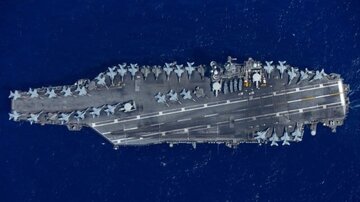
Iran's Ambassador to the UN added, "Third, unilateral sanctions, coercive measures, and the naval blockade imposed by the United States have further disrupted global supply chains and increased instability in energy and essential commodity markets."
The Permanent Representative of the Islamic Republic of Iran to the UN continued, "Fourth, lasting regional security can be achieved not through confrontation or reliance on external powers, but solely through dialogue, mutual respect, respect for sovereignty and territorial integrity, and genuine regional and international cooperation."
Iravani emphasized, "Iran remains committed to constructive engagement and efforts to restore stability, energy security, and return the Strait of Hormuz to normal conditions, provided that aggression and military escalation cease and the naval blockade is lifted."
Iran's Ambassador to the UN said, "Peace is not achieved through pressure, and stability is not built through confrontation. The only sustainable path forward is dialogue, mutual respect, and genuine international cooperation."
He emphasized, "I state unequivocally that the current situation in the Strait of Hormuz and its global economic consequences rest solely and exclusively with the initiators of the war against Iran and their regional partners."
**************
End/ 345E