

AhlulBayt News Agency: Mojtaba Amani, Iran’s Ambassador to Lebanon, said that given the complex situation in Gaza and Lebanon, the idea of disarming Hamas is unrealistic. He added that the Zionist regime lacks the capability to launch a large-scale war.
Mojtaba Amani, Iran’s Ambassador to Lebanon, said Sunday night in a special interview with the Islamic Republic of Iran Broadcasting (IRIB) that in light of the recent Israeli attacks on Gaza and Lebanon, the idea of disarming Hamas is an unattainable notion. He stressed that the Zionist regime does not have the capability to launch a large-scale war.
Amani said that Israel does not adhere to its commitments and conducts its attacks based on limited calculations. He noted that the regime seeks to carry out operations within certain boundaries to prevent the conflict from escalating.
Amani added that Hamas has agreed to only three conditions: a ceasefire, a prisoner exchange, and the reopening of border crossings for reconstruction — and has rejected any imposed political plan.
He further stated that Netanyahu, by partially violating the ceasefire, is trying to appease the hardline ministers in his cabinet without provoking a strong reaction from Hezbollah or other resistance groups.
97 martyred, 230 injured as Israel violates ceasefire 80 times
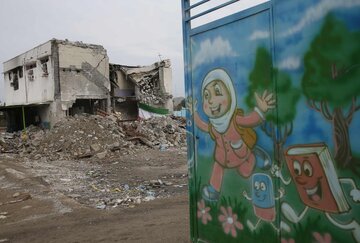
The Media Office of the Palestinian government in Gaza announced that since the declaration of the ceasefire, the Israeli regime has violated the truce 80 times, resulting in the martyrdom of 97 Palestinians and injuries to another 230 people.
The Sharm el-Sheikh Summit was held on Monday, October 13, 2025, hosted by Egypt and co-chaired by Egyptian President Abdel Fattah el-Sisi and U.S. President Donald Trump. Leaders and representatives from more than 20 countries attended the meeting, during which the U.S. president signed the so-called Gaza Peace Agreement along with other regional leaders.
Senator Paz wins Bolivia’s presidential election
Right-wing Bolivian senator Rodrigo Paz has won the second round of Bolivia’s presidential election, securing 54.5 percent of the vote. His rival, Jorge “Tuto” Quiroga, also a right-wing candidate, received 45.4 percent and was defeated.
The election marks the end of the long-standing dominance of the Movement for Socialism (MAS) party, which had governed the country almost continuously since 2006.
Hamas: The U.S. believes Israel’s lies
Hazem Qassem, spokesperson for the Islamic Resistance Movement (Hamas), said that the Zionist enemy is the source of chaos in the Gaza Strip and cannot tolerate seeing stability in the region. He added that the United States accepts the false claims that Israel spreads against Hamas.
Qassem stated that the U.S. State Department’s stance regarding Hamas’s alleged attacks on Gaza residents is “slanderous and baseless.”
The Hamas spokesperson stressed that the occupying regime constantly incites against Hamas, while Washington echoes its narrative and covers up Tel Aviv’s crimes against civilians in Gaza.
Grossi calls for continued diplomatic talks with Iran
Rafael Grossi, Director General of the International Atomic Energy Agency (IAEA), emphasized the importance of dialogue with Tehran and called for the continuation of diplomatic negotiations.
In an interview with the Neue Zürcher Zeitung, Grossi acknowledged that IAEA inspectors believe Iran has not hidden a significant amount of highly enriched uranium at undisclosed locations.
Regarding the possibility of IAEA inspectors gaining access to Iranian facilities, Grossi said such access would only be possible if Iran deemed it to be in its national interest.
Trump repeats drug allegations, this time against Colombia’s president
U.S. President Donald Trump accused Gustavo Petro, the president of Colombia, of supporting large-scale drug production in the country in a post on his social media platform Truth Social.
Repeating a claim similar to the one he previously made about Venezuela, Trump announced that U.S. financial aid and subsidies to Colombia would be suspended. He also warned that if Petro failed to take action to stop drug cultivation, the United States would intervene directly.
The accusation comes after the Colombian president earlier accused the United States of violating Colombia’s sovereignty and committing “acts of murder” in its territorial waters.
/129



Your Comment