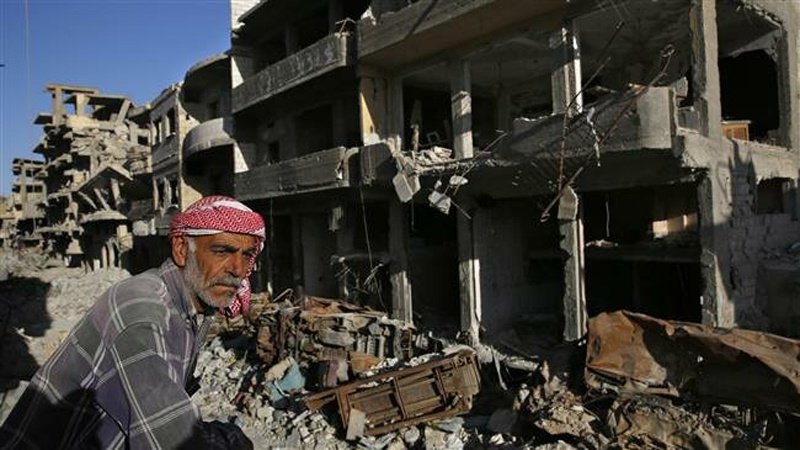
(ABNA24.com) Residents of Syria's Raqqah, which once served as the capital of the self-proclaimed “caliphate” of the Daesh terrorist group, yearn for the return of President Bashar al-Assad's rule, US magazine Foreign Policy reports.
Many Raqqah locals mistrust the Syrian Democratic Forces (SDF), a US-backed anti-Damascus alliance of mainly Kurdish militants that currently runs the Arab-majority city, the publication said.
Raqqah citizens, it added, believe that only the government of Assad can bring stability to the war-wracked city.
An activist, named by the pseudonym Hamoude, told Foreign Policy that his relatives who had fled Raqqah, said, “We will come back when the regime returns."
Daesh had once declared Raqqah as the de facto capital of a "caliphate" it started to build in Iraq and Syria in 2014 through a campaign of violence, invasion and extreme brutality against residents.
In October 2017, the United States and its SDF allies claimed victory over Daesh after carrying out a notoriously ruinous campaign in the northern Syrian city.
The Raqqah battle ended with a secret deal allowing hundreds of Daesh terrorists and their families to withdraw to neighboring Dayr al-Zawr Province.
Almost two years into the SDF occupation of Raqqah, locals "have also found SDF rule wanting" and are "cautious in expressing opposition to the SDF out of fear of retribution," according to the Foreign Policy report.
It also cited rumors among Raqqah's residents about an imminent handover of the city to the Damascus government after the liberation of Idlib Province, the last significant militant stronghold in Syria.
The report further stressed lack of basic services in Raqqah and the destruction of schools and hospitals have led locals to compare their current living conditions to their lives prior to the outbreak of the 2011 conflict.
/129