
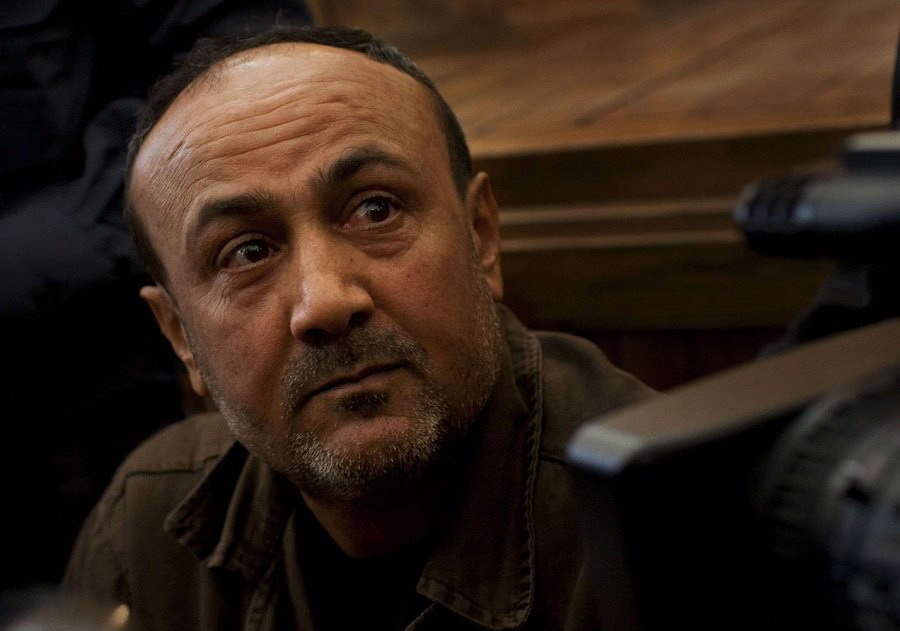
Fadwa said that after having being denied permission to visit Marwan since he led a mass prison hunger strike more than four months ago, the International Committee of the Red Cross (ICRC) facilitated a one-time permit for her to see Marwan last week.
However, after she left to visit her husband along with other relatives of Palestinian prisoners on Monday and waited outside the prison from between 9 a.m. and 4 p.m., Israeli forces eventually informed her that she would not be allowed to visit him until 2019, and that the permit issued to her had been a mistake.
Other reports said that the ban prevented her from visiting all Palestinian prisoners held by Israel as well.
Fadwa said that the decision to deny her the visits was a punishment directed at her, not at her husband, for her actions during the hunger strike that started last April, presumably referring to her own activism and participation in numerous solidarity protests throughout the 40-day strike.
By Tuesday evening, an IPS spokesperson did not respond to a request for comment sent on Monday regarding the ban placed on Fadwa.
Led by Barghouti, the mass strike, dubbed the Freedom and Dignity Strike, began on April 17. Thousands of prisoners joined the action and started to refuse food in incarceration to protest their dire conditions in Israeli jails.
The hunger strikers were demanding appropriate medical care and treatment in Israeli prisons, as well as an end to solitary confinement and the so-called administrative detention, which is a form of imprisonment without trial or charge.
The strike came to an end in late April after Israeli authorities agreed to a deal with the Palestinian prisoners.
Some 6,500 Palestinians are currently being held in Israeli jails, over 500 of them arbitrarily, according to figures provided by the Palestinian prisoners’ rights group Addameer in January. Palestinian inmates complain that they have been subjected to assault and torture at Israeli prisons.
/323



