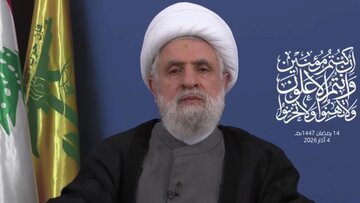
(Ahlul Bayt News Agency) - He cited the edict (fatwa) issued by Supreme Leader of Islamic Revolution Ayatollah Seyed Ali Khamenei prohibiting production and use of nuclear weapons.
Concerning the upcoming nuclear talks between Iran and G5+1, Emami Kashani advised G5+1 to consider the full-scale, extensive support of people for the Islamic Republic of Iran in all occasions including the recent parliamentary election on March 2 as well as the logical approach of Iranian supreme leader in all fields including the scientific Jihad.
“G5+1 should react to Iran’s proposals logically and stop the current unconstructive accusations against the Islamic Republic.”
Russian Foreign Minister Sergei Lavrov said on Friday that Moscow is optimistic about the outcome of upcoming Iran-G5+1 talks.
Chinese news outlets quoted the visiting head of china’s nuclear delegation to Istanbul Ma Ja Osho that “Progress of Iran-G5+1 nuclear talks play an important role in the establishment of peace and security in region.”
The official asserted that China supports Iran’s peaceful nuclear program.
Iranian delegation, headed by Supreme National Security Council Secretary and chief nuclear negotiator Saeed Jalili, arrived in Istanbul on Friday morning.
Iran and the Group 5+1 agreed to resume talks in Istanbul, Turkey, on April 14 and a second round in the Iraqi capital city, Baghdad.
The last meeting between the two sides took place in Istanbul in January 2011. Iran and the G5+1 had also held two rounds of multifaceted talks in Geneva in December 2010.
Washington and its Western allies accuse Iran of trying to develop nuclear weapons under the cover of a civilian nuclear program, while they have never presented any corroborative evidence to substantiate their allegations. Iran denies the charges and insists that its nuclear program is for peaceful purposes only.
Tehran stresses that the country has always pursued a civilian path to provide power to the growing number of Iranian population, whose fossil fuel would eventually run dry.
Despite the rules enshrined in the Non-Proliferation Treaty (NPT) entitling every member state, including Iran, to the right of uranium enrichment, Tehran is now under four rounds of UN Security Council sanctions for turning down West's calls to give up its right of uranium enrichment.
Tehran has dismissed the West's demands as politically tainted and illogical, stressing those sanctions and pressures merely consolidate Iranians’ national resolve to continue with the civilian program.
/106