

AhlulBayt News Agency: Maulana Syed Kalbe Jawad Naqvi inaugurated the centre by releasing a book at a ceremony attended by a large number of Islamic scholars, literary figures and prominent personalities from the city.
Ayatollah Azeem Syed Ali Naqi was among the prominent religious and academic figures of India and the wider subcontinent. Until his death in 1988, he authored more than 250 books, which were published in several languages, including Urdu, Arabic, Persian, English and Hindi.
The Syed-ul-Ulama Media Centre has been established at Imambara Sibtainabad to preserve this valuable intellectual heritage and carry forward his educational mission. Its inauguration took place in the presence of several scholars and distinguished personalities, alongside the formal release of a book.
Among those attending the ceremony were Maulana Raza Haider, Maulana Asatfa Raza, Ameer Haider, Maulana Sabir Ali Umrani, Adil Faraz, Roshan Taqi, Nadeem Agha, Amanat Hussain Naqvi, Mah Rukh Mirza and Aman Abbas, along with other prominent residents of Lucknow and admirers of Ayatollah Syed Ali Naqi.
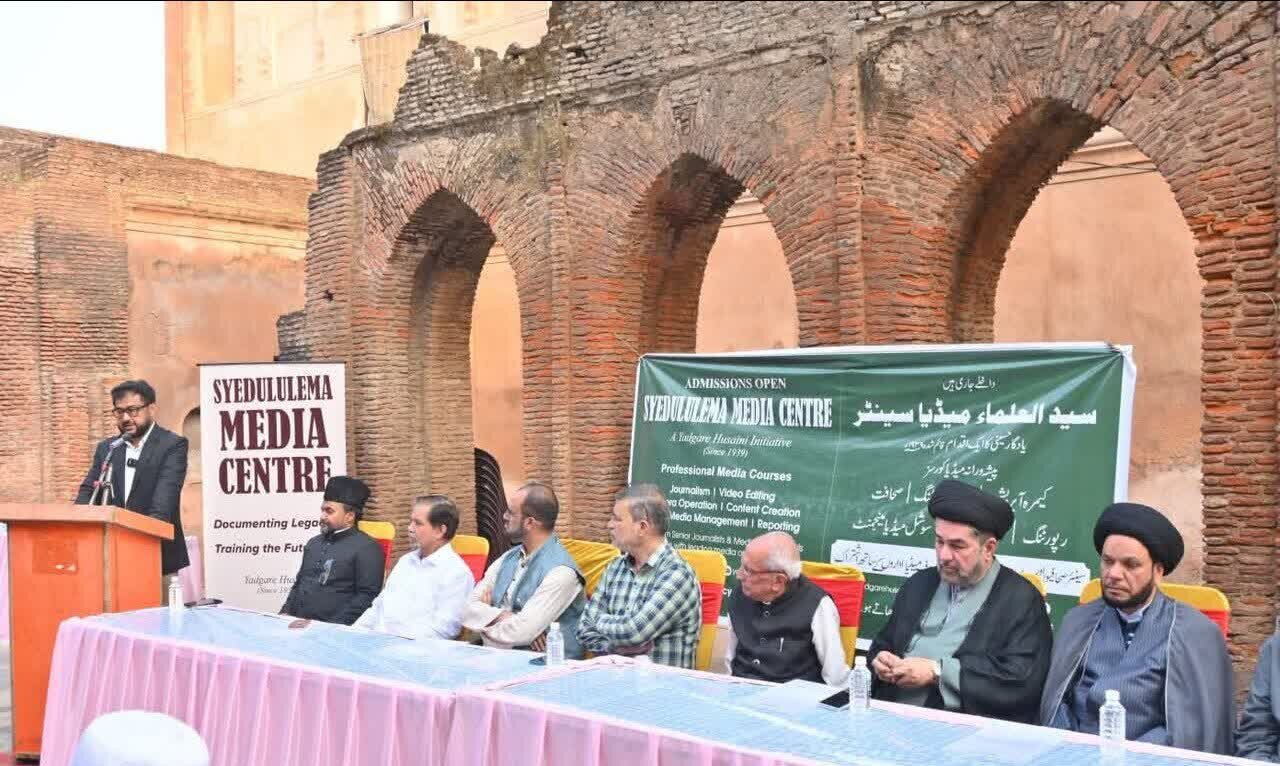
Addressing the gathering, Syed Aziz Haider, general secretary of Yadgar-e-Hussaini, said the organisers had deliberately chosen to inaugurate the centre through a book release rather than a traditional ribbon-cutting ceremony or lamp-lighting ritual. He explained that the true legacy of Syed-ul-Ulama lies in knowledge, books and speeches.
He said that one of the centre's key priorities would be to explore ways of taking this vast repository of knowledge to a wider audience in the digital age. He added that plans were also being developed to introduce media courses with the participation of media professionals and launch various welfare initiatives for people working in the media sector. An announcement regarding these programmes is expected soon. Discussions are also underway to establish partnerships with several active media organisations.
Dr Syed Amanat Hussain Naqvi, convener of the Syed-ul-Ulama Media Centre, presented a paper at the event, outlining the significant contributions and activities undertaken by Yadgar-e-Hussaini since its establishment in 1939.
Addressing the gathering, Maulana Syed Kalbe Jawad Naqvi, president of the Syed-ul-Ulama Media Centre, said that the personality of Imam Hussain (AS) was so great and universal that people belonging to different religions and communities held him in deep reverence.
Highlighting the responsibilities of Yadgar-e-Hussaini, he said the organisation must convey the true purpose and message of Imam Hussain's martyrdom to people of all faiths and ideological backgrounds. He added that their responsibility was to make sincere efforts, while the ultimate outcome rested with Allah Almighty.
Maulana Raza Haider Zaidi said that one of the principal objectives behind the establishment of the organisation in 1939 was to communicate the message of Imam Hussain (AS) to non-Muslim communities.
Referring to a saying of one of the Imams (AS), he observed that if people understood the beauty and wisdom of the teachings of the Ahl al-Bayt (AS), they would naturally be drawn towards following them. He stressed that everyone had a responsibility to make every possible effort to spread the message of the Ahl al-Bayt throughout India.
Sharing his views, Maulana Asatfa Raza said that distinguished literary figures such as Josh Malihabadi and Niaz Fatehpuri had also been influenced by Syed-ul-Ulama. Referring particularly to Niaz Fatehpuri, he said one of Syed-ul-Ulama's remarkable qualities was his unwavering commitment to civility, courtesy and literary decorum.
Ameer Haider, in his address, said that it was better to remain committed to the truth and face defeat than to support falsehood. Referring to the scholars and admirers of Syed-ul-Ulama gathered at the event, he said that the presence of so many educated and knowledgeable individuals under one roof reflected their deep connection with the legacy of the eminent scholar.
Maulana Sabir Ali Umrani said that those who worked for the pleasure of Allah were granted lasting honour and recognition by Him. He noted that Syed-ul-Ulama had undertaken educational and research initiatives in response to the needs of his time and had authored numerous books.
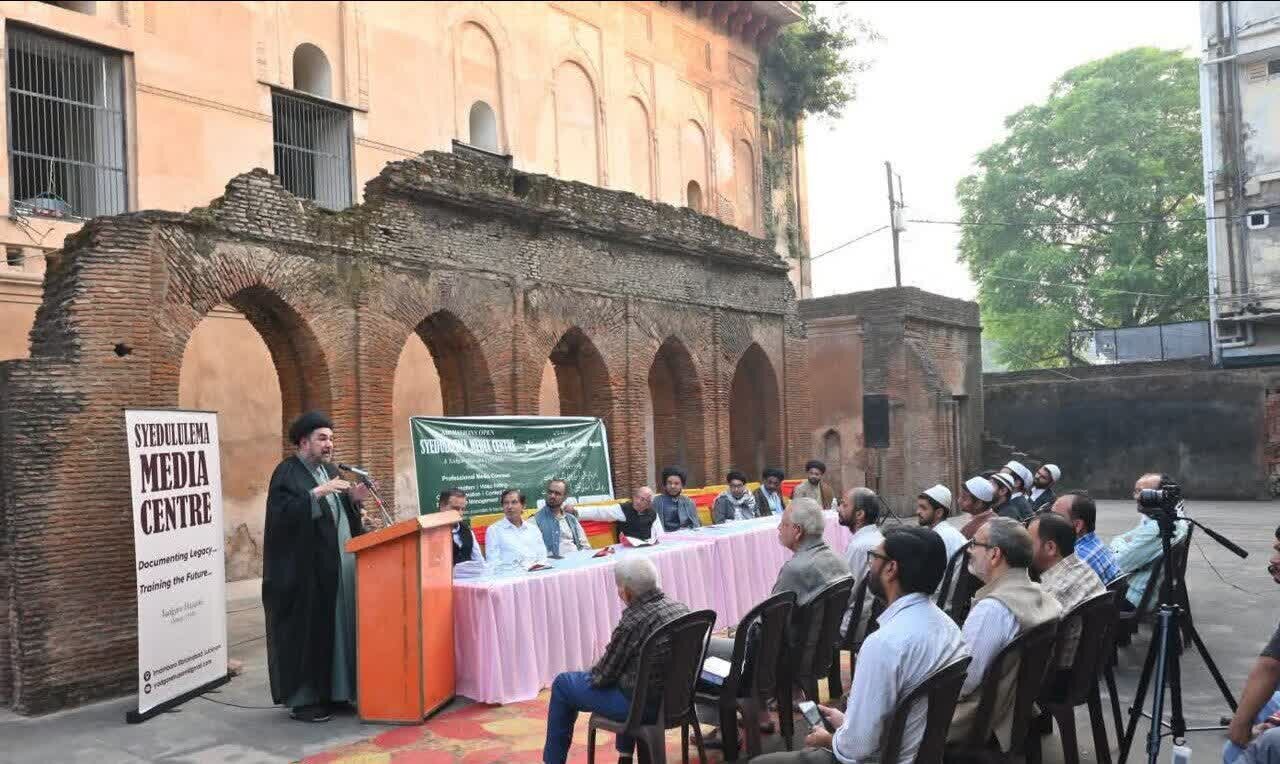
Emphasising the importance of continued study and research, he encouraged young people to read Syed-ul-Ulama's books and listen to his speeches.
He further observed that one of Syed-ul-Ulama's distinctive qualities was his ability to present his speeches in written form and his written works as spoken discourse. Describing the present era as an age of media, he stressed the need to make effective use of modern media platforms to bring Syed-ul-Ulama's educational and literary contributions to a wider audience.
It is noteworthy that, alongside the inauguration of the Syed-ul-Ulama Media Centre, the book Ayatollah Sheikh Mohammad Ali al-Umari: Seerat-o-Kirdar ke Aaine Mein was also formally released. The Urdu translation of the book was prepared by Maulana Sabir Ali Umrani.




Your Comment