

ABNA24 - Kayhan, in an analysis, discussed the importance of the Strait of Hormuz for Iran and wrote: Iran proved in the Ramadan War that it is not easy to engage with the Islamic Republic, but it did not reach the point where the enemy would avoid fighting it altogether. During the war, Trump was surprised that Iran stood firm
Part of this surprise came from the incorrect information that those around him had given him. One of the constant and unwavering elements of Iran’s deterrent power, which was revealed in the Ramadan War, is the Strait of Hormuz and, even beyond that, the ‘element of geography.’ For a country with the features of the Islamic Republic, one that emphasizes independence and freedom of action in an unjust global order, and whose opponents do not want certain benefits to reach it, the Strait of Hormuz is the greatest guarantor. The other side of the story is that when countries in the regional environment feel weak in protecting themselves and turn to powerful states in the region, this means the creation of power by the Strait of Hormuz. Using this element prevents the enemy from forming an anti‑Iran coalition around Iran. So, in one sentence, the Strait has given Iran a prominent position in deterrence, although it is still not decisive or sufficient.
Arman‑e-Melli: America’s failure in the war
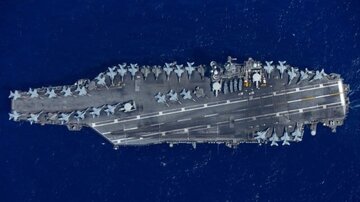
Arman‑e Melli wrote in an article: Recent developments show that the predetermined calculations of the United States and Israel in attacking Iran, such as regime change, pressuring China by restricting Iran’s oil exports to that country, and so on, have been completely disrupted. As a result, in a new approach after the ceasefire, they have turned to using their new card: a naval blockade. While Trump and Netanyahu hoped to achieve their goals through military and economic pressure, what they gained instead was increased tensions and internal and global pressure against this approach due to the energy crisis and the region's becoming increasingly insecure. The naval blockade has not created much of a challenge for Iran as a pressure tool, because Iran has learned many ways to evade sanctions over the years and can use them to break naval blockades. Iran has been able to export oil at a price higher than before the war, and in addition, has even generated new foreign‑currency revenue through fees collected from the Strait of Hormuz.
Khorasan: The naval blockade as a long‑term economic war
Khorasan, in an analysis, examined the war and the naval blockade imposed by the United States. Trump’s recent remarks about intensifying the naval blockade are a sign of a paradigm shift in America’s strategy against Iran, and it can be said that the United States has shifted from a temporary and short‑term action to a long‑term and sustained strategy for pressuring Iran. In simpler terms, this is a decision to continue and constantly increase pressure until Iran is forced to accept Trump’s demands. This shift moves the war, for the United States, from a phase of displaying power to a phase of managing the war. Unlike costly options such as a military attack or withdrawing from the war, which would cause embarrassment for Trump, the White House is now relying on a tool that can be described as pressure with minimal military cost and maximum social impact. Within this framework, the naval blockade is not a tactical action but the infrastructure of a long‑term economic war—one whose goal is not physical destruction but the gradual draining of the financial and psychological capacity of the opposing side.
Iran: Iran’s initiative to move beyond exhausting negotiations
Iran presented a three‑stage plan to the United States, according to which each step must be implemented only after verification of the previous one. At the top of the plan is ending the war and stabilizing peace, followed by lifting the blockade and returning normal conditions to shipping routes, so that if Washington’s goodwill is observed in practice, other disputed issues can be placed on the table in later stages. Evidence shows that the Americans have not yet given a clear and final response to this Iranian proposal—an indication that Washington is still wavering between the necessity of an agreement and its own considerations. In this atmosphere, Iran, without waiting too long and in order to maintain diplomatic momentum, sent a newer version of its proposal to Washington last Thursday night through Pakistan. This move signals Iran’s effort to manage the sensitive moment after the war, stabilize the existing ceasefire, and turn the current limited opportunity into a lasting agreement before the suspended and ambiguous situation on the ground once again gives way to renewed tensions.
/129

Your Comment