

Iranian University Instructors and Academics Addressed was send letter to Academic Community Worldwide.
The text is follow:
Letter from Iranian University Instructors and Academics Addressed to the Academic Community Worldwide
In the Name of God, the Most Compassionate, the Most Merciful
Esteemed Professors and Colleagues at Universities Worldwide, Warm greetings and respect
We, a large group of University Instructors and researchers from universities of the Islamic Republic of Iran, address this letter to you, not only as members of the global scientific community but also as advocates of justice, human dignity, and the shared values of science, truth, and the ethical responsibility of academics.
In recent days, our country has witnessed the assassination of our supreme leader, senior officials, and a number of distinguished Iranian scientists—individuals who, alongside millions of citizens of this land, have played an essential role in the scientific, social, and infrastructural development of Iran over the past 47 years. We have clearly observed the fruits of their efforts in the ongoing growth and progress of our nation.
Despite years of war, external pressures, and comprehensive sanctions, Iran has achieved notable advancements across various social, scientific, and technological domains. Today, over 96% of Iran’s population has access to safe drinking water,¹ and 96 % benefit from electricity and natural gas.²
Iran ranks among the top three countries globally in terms of low costs for water, electricity, natural gas, and gasoline, with gasoline pricing among the lowest in the world.³ In the realm of health and social welfare, approximately 65 million people in the country are covered by health insurance.⁴
In science and technology, Iran has attained significant international standing, including ranking ninth globally in aerospace sciences,⁵ fourth in nanotechnology studies,⁶ and among the top ten countries in patent registrations.⁷ Moreover, 1144 Iranian scientists are among the top one percent of the world’s most cited researchers.⁸
Remarkable progress has also been made in medicine and healthcare. Iran has developed the first specialized dressing for patients with epidermolysis bullosa,⁹ and is among the world’s leading countries in pediatric heart 2
surgery.¹⁰ Our country is recognized as a global leader in the lowest-cost organ transplantation¹¹ and is one of the few countries producing heart valves.¹² Iran is also a pioneer in the treatment of thalassemia through bone marrow transplantation,¹³ and ranks among the top ten countries globally in plastic surgery.¹⁴ It holds the fifteenth rank globally in ophthalmology,¹⁵ and ranks first in the region in neurosurgery.¹⁶ In the field of infertility treatment and assisted reproductive technologies,Iran has achieved a prominent global position through the activities of institutions such as the Royan Institute.¹⁷
Additionally, 95 percent of specialized medicines required by the population are produced domestically,¹⁸ and as a result, the mortality rate for children under five years of age has fallen to fewer than 15 per 1,000 live births.¹⁹
Significant advances have likewise been made in education, especially through the empowerment of girls and women. The gender gap in education has been almost entirely eliminated, with 97 percent of Iranian girls being literate, while the national literacy rate has exceeded 85 percent.²⁰
Women are prominently present in scientific and social fields, with over 90,000 female faculty members (40% of all faculty members) teaching at universities,²¹ more than 1,000 female judges practicing in the country,²² women constituting 60 percent of teachers,²³ 40 percent of specialist physicians, and 30 percent of subspecialist physicians.²⁴ Women also comprise half of the country’s researchers and social activists.²⁵
Furthermore, 2,593 women are currently serving as the Islamic Republic of Iran managers.²⁶
In strategic scientific and technological fields, Iran is among the leading countries, ranking among the top ten global powers in missile technology,²⁷ first in submarine construction in the region,²⁸ and sixteenth globally in the knowledge-based economy.²⁹
Never theless, a nation that has dedicated decades to scientific development, social welfare, and human progress is today being unjustly subjected to military aggression from the soil of certain friendly and neighboring countries—an aggression in clear contravention of the fundamental principles of international law, particularly Article 2, Paragraph 4 of the Charter of the United Nations, which prohibits the threat or use of force against the territorial integrity or political independence of states.
As a result of the military aggression by the United States and the occupying Israel regime, and in complete violation of the principles of international humanitarian law—including the rules enshrined in the four 3
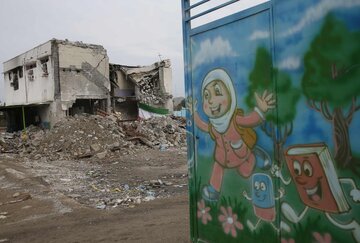
Geneva Conventions of 1949 and Additional Protocol I of 1977, which emphasize the principle of distinction between military and civilian objectives and the principle of proportionality in armed conflicts—more than 20,000 individuals have been injured, and approximately 2,000 have lost their lives up to present.³⁰ Among the deceased are 220 children (including 168 female students in a classroom in Minab) and 250 women.³¹
Moreover, more than 80,000 civilian structures have been destroyed, including 498 schools, 251 healthcare facilities, and over 65,000 residential units.³² Among Iranian academics, 20 professors and a large number of students were killed in the two recent US-Israel attacks, and several universities, student dormitories and hospitals at medical universities were damaged.
During these attacks,vital infrastructure facilities have also been targeted,including the destruction of power facilities and a desalination unit, resulting in the interruption of water access for more than three villages.³³ Additionally, the targeting of fuel storage tanks has caused extensive environmental pollution and a phenomenon known as «black rain,» leading to contamination of surface and groundwater, soil, and air, and posing a threat to the health of citizens, particularly in Tehran.³⁴
Such actions, under the Rome Statute of the International Criminal Court (Article 8), can constitute war crimes, as they involve attacks on civilian objectives, the destruction of infrastructure vital to the survival of civilians, and the infliction of severe damage on the environment and public health.
As members of the global academic community, we believe that universities have always served as the conscience of humanity, and silence in the face of human suffering is incompatible with the ethical mission of knowledge and academia. Therefore, we request that you, as professors and scholars around the world, utilizing your scientific and social standing—particularly on social media and within scientific and academic networks—amplify the voice of the oppressed, but resistant, people of Iran to the global community. We urge you to emphasize the necessity for states to adhere to the principles of international law, human rights, and international humanitarian law.
Justice, peace, and human dignity are universal values, and the responsibility to uphold them rests with all of us.
With respect and hope for scientific and human solidarity, A Group of Iranian University Instructors and Academics 4
Sources
¹ Safe Drinking Water Access: World Bank. People using at least basic drinking water services (% of population) – Iran. World Development Indicators; WHO & UNICEF Joint Monitoring Programme. Progress on household drinking water, sanitation and hygiene.
² Electricity and Natural Gas Access: International Energy Agency (IEA). Iran Energy Profile; National Iranian Gas Company (NIGC). Annual Gas Distribution Reports.
³ Lowest Global Energy Prices: GlobalPetrolPrices.com. Gasoline prices, Iran; International Energy Agency (IEA). Energy Subsidies Database / Iran Energy Profile; World Bank. Iran Energy Subsidy Reform and Energy Pricing.
⁴ Health Insurance Coverage: Iran Health Insurance Organization (IHIO) – Annual Reports; World Health Organization (WHO). Islamic Republic of Iran – Health System Profile; World Bank. Toward Universal Health Coverage in the Islamic Republic of Iran.
⁵ Aerospace Engineering Ranking: SCImago Journal & Country Rank (SJR). Aerospace Engineering – Country Ranking.
⁶ Nanotechnology Ranking: StatNano. Iran Nanotechnology Publication Ranking; UNESCO Science Report; Web of Science database.
⁷ Patent Registration Ranking: World Intellectual Property Organization (WIPO). World Intellectual Property Indicators; WIPO. Global Innovation Index.
⁸ Top 1% Scientists: Clarivate Analytics. Essential Science Indicators (ESI) – Top 1% Scientists; Islamic World Science Citation Center (ISC).
⁹ Epidermolysis Bullosa Dressing: StatNano. «Nanotechnology Products for Epidermolysis Bullosa Treatment in Iran.»
¹⁰ Pediatric Heart Surgery: WHO EMRO – Health System Profile: Iran; World Bank – Iran Health Sector Review.
¹¹ Lowest-Cost Organ Transplantation: Ghods, A.J. «The Iranian Model of Living Kidney Donation.» American Journal of Transplantation.
¹² Heart Valve Production: Journal of Artificial Organs – studies on development of bioprosthetic heart valves.
¹ ³ T h a l a s s e m i a Tr e a t m e n t v i a B o n e M a r r o w Tr a n s p l a n t : B o n e M a r r o w Tr a n s p l a n t a t i o n ( N a t u r e Publishing Group) ; The Lancet Haematology; European Society for Blood and Marrow Transplantation (EBMT); Ghavamzadeh, A. et al. «Hematopoietic Stem Cell Transplantation for Thalassemia in Iran.» Bone Marrow Transplantation.
¹⁴ Plastic Surgery Ranking: International Society of Aesthetic Plastic Surgery (ISAPS). Global Survey on Aesthetic/Cosmetic Procedures.
¹⁵ Ophthalmology Ranking: ISAPS Global Survey; SCImago Journal & Country Rank – Subject Area: Ophthalmology.
¹⁶ Neurosurgery Ranking: World Federation of Neurosurgical Societies (WFNS).
¹⁷ Assisted Reproductive Technologies: International Committee for Monitoring Assisted Reproductive Technology (ICMART).
¹⁸ Domestic Production of Specialized Medicines: World Health Organization (WHO) – Country Pharmaceutical Profile: Iran; Iran Food and Drug Administration (IFDA).
¹⁹ Under‑5 Mortality Rate: World Bank. Under‑5 Mortality Rate – Iran; UNICEF / WHO / World Bank / UN DESA. Levels and Trends in Child Mortality Report (UN IGME).
²⁰ Literacy Rates: UNESCO Institute for Statistics – Education Data for Iran; World Bank – Literacy rate, adult total (%ages 15 and above).
²¹ Female Faculty Members: Ministry of Science, Research and Technology of the Islamic Republic of Iran.
²² Female Judges: Judiciary of the Islamic Republic of Iran.
²³ Female Teachers: Ministry of Education of the Islamic Republic of Iran.
²⁴ Female Physicians: Ministry of Health and Medical Education of the Islamic Republic of Iran.
²⁵ Female Researchers and Social Activists: Ministry of Science, Research and Technology of the Islamic Republic of Iran.
²⁶ Female Managers in the Fourteenth Administration: State Employment Administration of the Islamic Republic of Iran.
²⁷ Missile Technology Ranking: CSIS. Missile Threat: Iran Missile Overview.
²⁸ Submarine Construction Ranking: IISS – The Military Balance; Jane’s Defence Weekly / Jane’s Fighting Ships.
²⁹ Knowledge-Based Economy Ranking: WIPO. Global Innovation Index.
³⁰ Casualty Figures: Ministry of Health and Medical Education of the Islamic Republic of Iran.
³¹ Demographic Breakdown of Casualties: Ministry of Health and Medical Education of the Islamic Republic of Iran.
³² Civilian Infrastructure Damage: Iranian Red Crescent Society.
³³ Targeting of Power and Desalination Facilities: Iranian Red Crescent Society.
³⁴ Environmental Pollution («Black Rain»): Iranian Red Crescent Society; Ministry of Health and Medical Education of the Islamic Republic of Iran.



Your Comment