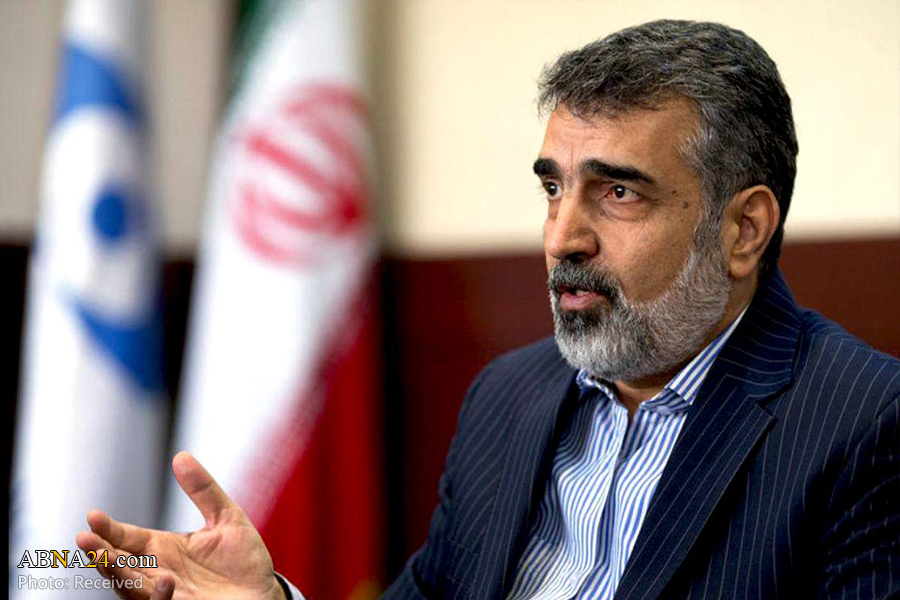
AhlulBayt News Agency (ABNA): The Atomic Energy Organization of Iran (AEOI), the country’s nuclear agency, suspects Israeli involvement in both a July incident at Iran’s Natanz nuclear facility, and the recent assassination of a prominent Iranian nuclear scientist near Tehran.
Speaking on Saturday, AEOI Spokesman Behrouz Kamalvandi said the Islamic Republic’s enemies had gone beyond just trying to tarnish its nuclear activities.
“Their footprint is clearly visible in various incidents,” he noted.
“Concerning the Natanz incident, it could be said that its perpetrators are the same as those behind the recent incident. It looks like the Zionist regime [of Israel] has a role in these issues,” Kamalvandi said.
Natanz is a uranium enrichment center located in the city of the same name in Iran’s central Isfahan Province. On July 2, the facility was targeted in an incident that caused material damage to one of its inactive sheds that was located in an open area.
The Iranian expert, Mohsen Fakhrizadeh, who headed the Iranian Defense Ministry’s Organization of Defensive Innovation and Research, was targeted on Friday in a multi-pronged attack involving at least one explosion and small fire by a number of assailants in Absard city of Tehran Province’s Damavand County.
No party has yet claimed responsibility for the atrocity.
However, the United States and Israel have, throughout the entire lifespan of Iran’s nuclear energy program, been changelessly trying to demonize it. The duo that are each other’s strongest allies, have worked tirelessly to try and restrict Iran’s nuclear work through international bodies or coercive and brutal measures.
Tel Aviv has assassinated several Iranian scientists in the past.
The occupying regime, which is the Middle East’s sole possessor of nuclear weapons, persuaded Washington to leave a historic nuclear accord between Tehran and world powers in 2018 and restore the sanctions that the agreement had lifted.
This is while the Islamic Republic has invariably provided unstinting cooperation with the International Atomic Energy Agency. The United Nations’ nuclear agency has, by its own admission, subjected the country’s nuclear work to the most extensive and recurrent examinations throughout history.
“Whatever is a component of our points of strength today is the enemy’s target,” Kamalvandi noted, saying the country’s ill-wishers were seeking to frustrate it from making progress.
However, he expressed confidence that Iran’s adversaries “will not get anywhere.” “This is a tough and rocky terrain [for us], but we will, God willing, reach [our desired] results with conviction and by relying on divine power.”
The official advised, therefore, that the country “double its efforts” on the industrial arena and “deliver a decisive response” to such acts of sabotage in the security sphere too.
Following the assassination, Leader of the Islamic Revolution Ayatollah Seyyed Ali Khamenei called on Iranian experts to preserve the scientific and technical legacy of the nuclear physicist, and ordered punishment of his assassins.
President Hassan Rouhani also warned of a plot hatched by Israel to incite chaos in the region, vowing that Tehran would respond to the assassination at the proper time.
.........................................
End/ 257