
Israel's War Minister, Avigdor Lieberman, summed up this concept in his description of the regional environment that was formed after ISIS. He spoke about three major changes: the extensive Russian presence in Syria, which changes the whole situation in the north, the arrival of precision weapons to Hezbollah and Syria, and the development of the Iranian missile program.
Lieberman's position was revealed in the context of trying to justify the demand for an increase in the army's budget by about USD 1 billion. Netanyahu's position later demanded more than double that amount in order to meet the demands of facing the growing threats to Israel's national security.
What is the nature of these variables, and why was the demand to increase the security budget inverted?
The demand for an increase in the security budget comes in contrast to the agreement signed between former War Minister Moshe Ya'alon and Finance Minister Moshe Kahlon, which included setting the security budget at 300 billion Shekels over five years [2016-2020]. It was agreed with the Israeli Chief of Staff Gadi Eizenkot that the army's share would be 31 billion Shekels, in addition to the US support from the beginning of 2019, amounting to USD 3.8 billion annually.
This agreement was signed with a different regional reality in mind and based on a vision and estimate that excludes the acceleration of victories by Damascus and its allies at this rate on the Syrian arena. However, the pace of developments and field surprises and strategy led to a rise in the level of threats against Israel from the northern front.
This shift and the escalating threats it entails have led the relevant bodies in Tel Aviv calling for an amendment to the military and combat plans, which necessitate an increase in the army's requirement for more modern weapons and consequently an increase in spending.
This track reveals the magnitude of the surprise encountered by the security establishment, which accepted an agreement that set its budget for the next five years based on an assessment that the volume of threats threatening Israel would not escalate in the worst cases.
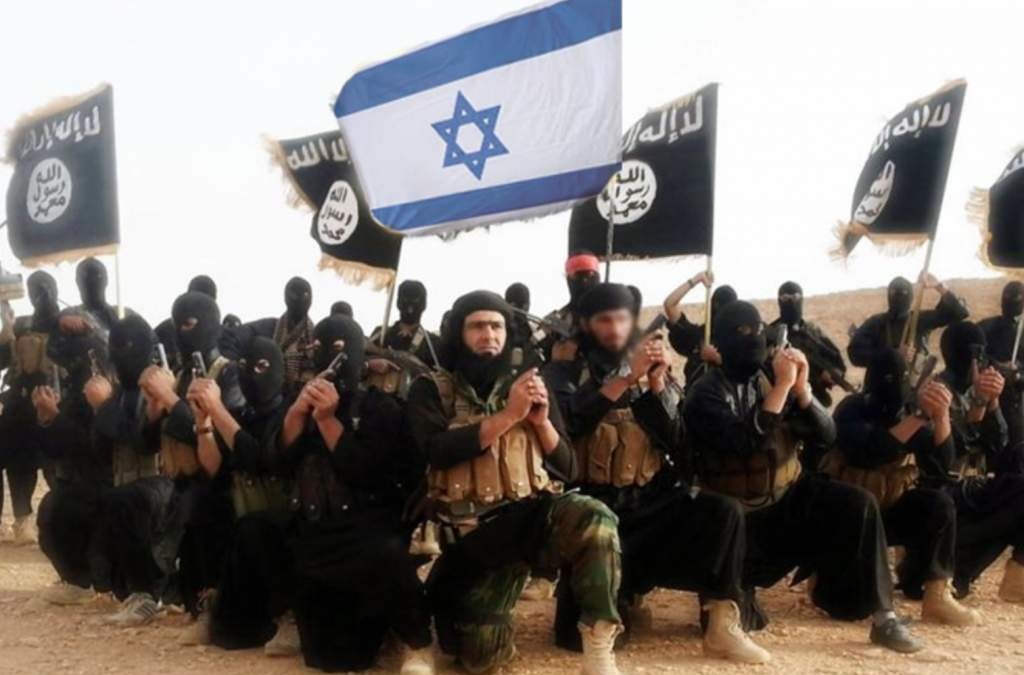
It did not occur to the Israeli leaders that Russia would become a regional military force on the border of Israel. At first, Israel was betting that the armed and terrorist groups, especially ISIS, could turn the Syrian arena into a quagmire for Russian forces and topple all the forces facing them. Later, the Israeli wager centered on the steadfastness of the terrorist groups and the hope that they would drain the resistance axis along with the Russian forces.
The hope prevailing in Tel Aviv was to create a sort of balance that divides the Syrian and Iraqi geography. Then the bet turned on Russia playing the role of a brake on the resistance axis and imposing political and security formulas that meet Israeli aspirations and hopes on the Syrian arena. The bilateral agreement between Washington and Moscow on reducing tension in Syria's south posed a shock and caused confusion in the political and security institutions in Israel.
However, it should be said that Russia is still - from an Israeli perspective - a regional force and an obligatory entry point for any political or security arrangement on the Syrian arena. On the other hand, it is a partner in the axis of resistance that confronts terrorism and surpasses the circle of intersections with the Islamic Republic. This is also without ignoring the fact that it is a state keen on positive bilateral relations with the occupying Israeli entity. This overlapping and complex Israeli-Russian relationship reinforced Tel Aviv's fears of the effects of Russia's presence due to the common area of interest between Russia and the resistance.
The elimination of ISIS boosted Israeli fears over the fact that the stage of betting on the depletion of the axis of resistance has ended, limiting it to facing Israel. Since the elimination of ISIS came in favor of the Syrian army and its allies, this means that Tel Aviv has more sophisticated military and missile capabilities. This means that the threat to Israel's national security is growing. This also means further restrictions on any Israeli decision to activate Tel Aviv's role in the region as an alternative option to the armed and terrorist groups.
All this is supported by a growing trend in the development of Iran's missile and military industries.
Tel Aviv's problem - the source of the threat to it - is that the buffer [ISIS's control], which could have prevented the flow of these capabilities and prevented the continuation of the axis of resistance and the formation of a regional umbrella that scales down US hegemony has been uprooted. Its pillars have been destroyed.
Israel has come face to face with the forces of the resistance. In other words, the demise of ISIS forced Israel to demand more advanced weapons and increase the security budget. Netanyahu's announcement to Russian President Vladimir Putin that the Iranian presence in Syria contradicts [poses a challenge to] the principles of Israel's national security should be understood in this context.
/106



