
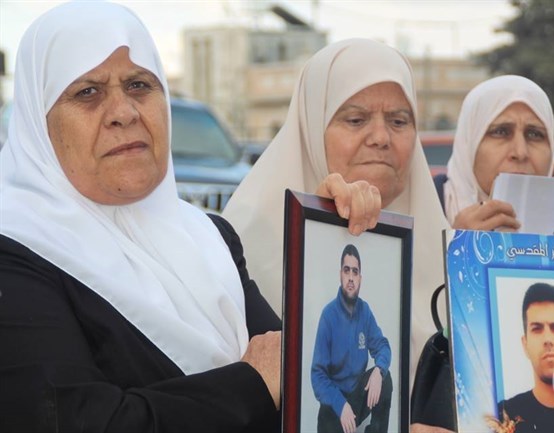
Participants of the sit-in, which was organized by the Palestinian Prisoner’s Society (PPS) and the Jerusalem Committee for Families of Prisoners, said they were deeply concerned about the deteriorating conditions of their loved ones, and were distraught over the lack of information about the prisoners’ healths.
The ICRC has been the target of sustained frustration for its perceived inability to improve conditions for Palestinians in Israeli prisons, as the organization prioritizes maintaining its role as an “impartial humanitarian mediator.”
The Palestinian Committee of Prisoners' Affairs has also called upon the ICRC to issue a detailed report about the prisoners' healths, particularly after almost no details were shared about a recent ICRC visit to strike leader Marwan Barghouthi.
Since the strike began on April 17, Israeli authorities banned hunger strikers from receiving visits from their family members or their attorneys.
The mother of hunger-striking Jerusalemite prisoner Abada Dandis said that she was able to visit her son a few days ago, after not having received any information about him or being allowed to visit him since mid-April.
Dandis joined the hunger strike on its first day, but was forced to quit after 22 days after suffering from internal bleeding in his stomach and critical weight loss.
Once he broke the strike, Israeli prison authorities finally allowed him to receive visit from his mother, who identified herself to as Umm Abada.
"When I walked into the visitation room, I didn’t even recognize my own son. I was with my daughter and his sons, we started looking for him until he finally found us. He was emaciated, exhausted... it was clear from his appearance that he was extremely ill."
Dandis told his mother that despite the difficult circumstances and deteriorating health conditions, prisoners were still in high spirits and affirmed that they would continue hunger strikes until they achieved their demands. He also stressed the importance of maintaining public support for prisoners.
Umm Abada also demanded that legal institutions and Palestinian leadership intervene so that her son be transferred to a hospital for proper medical care.
Palestinian prisoners are calling for an end to the denial of family visits, the right to pursue higher education, appropriate medical care and treatment, and an end to solitary confinement and administrative detention -- imprisonment without charge or trial -- among other demands for basic rights.


/257



