
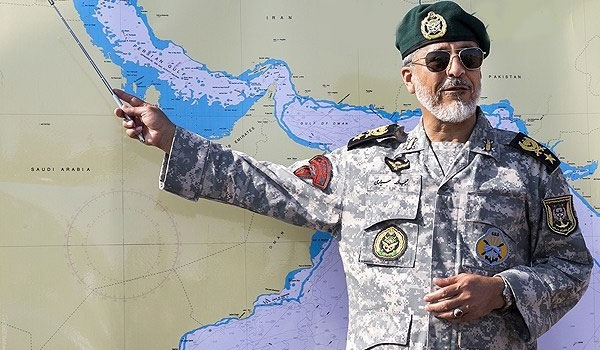
"Redeployment in the Atlantic Ocean, intelligence superiority, development of communications, progress in the development of Makran coasts and building new vessels are among the Navy's plans in the current (Iranian) year (started on March 21)," Rear Admiral Sayyari said on Wednesday.
He also referred to the Iranian Navy's powerful presence in the high seas, and said, "3,900 ships have been escorted by the Navy's fleets of warships sent to the free waters."
The Iranian Navy deployed a flotilla of warships in the Atlantic Ocean in November.
"For the first time, the 44th flotilla comprised of Alvand and Bushehr destroyers could sail around the African continent and enter the Atlantic Ocean," Admiral Sayyari told reporters in Tehran at the time.
In recent years, Iran’s Navy has been increasing its presence in international waters to protect naval routes and provide security for trade vessels and tankers.
The Islamic Republic has repeatedly asserted that its overseas naval presence is meant to convey a message of peace and friendship to other countries.
Iranian officials and commanders have repeatedly underlined that all military exercises and trainings of the Iranian Armed Forces are merely meant to serve deterrent purposes.
The Iranian Navy has been conducting anti-piracy patrols in the Gulf of Aden since November 2008, when Somali raiders hijacked the Iranian-chartered cargo ship, MV Delight, off the coast of Yemen.
According to UN Security Council resolutions, different countries can send their warships to the Gulf of Aden and coastal waters of Somalia against the pirates and even with prior notice to Somali government enter the territorial waters of that country in pursuit of Somali sea pirates.
The Gulf of Aden - which links the Indian Ocean with the Suez Canal and the Mediterranean Sea - is an important energy corridor, particularly because Persian Gulf oil is shipped to the West via the Suez Canal.
/106



