
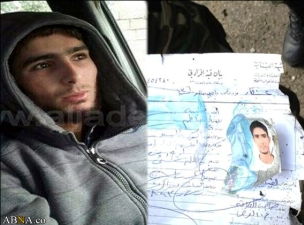
(Ahlul Bayt News Agency) The remains of 19-year-old Koteiba Mohammed al-Satem were discovered inside the vehicle that detonated in the Haret Hreik neighborhood Thursday afternoon killing at least four people and injuring dozens more.
The young man's father said his son had been missing since December 30, according to army sources who interrogated him on Friday, state news reported.
His DNA was matched to samples provided to investigators by his mother Fawzia at an army station near their home village of Wadi Khaled, which sits on the Syrian border in the Northern Akkar district.
Satem's identity card was discovered at the scene of the blast, which led investigators to suspect the university student of involvement in the explosion.
Residents of Wadi Khaled condemned the bombing in a statement issued by the municipality on Friday, but raised serious doubts that Satem could have been behind the attack.
The statement claimed that Satem did not know how to drive, and said he was not known for having political or sectarian affiliations.
CCTV footage aired by Al Manar television on Friday shows Thursday's explosion. A Jeep Grand Cherokee appeared to be moving slowly down a road before suddenly igniting while making a left turn.
Interior Minister Marwan Charbel and State Prosecutor Samir Hammoud have both said that evidence points to a suicide attack, but no official declaration has been issued over the incident.
The attack was the fourth such bombing in Beirut's Southern suburbs known as Dahiyeh since July 2013. It appeared to target civilians in the densely populated neighborhood packed with shops, clothing stores and restaurants.
No one has claimed responsibility for the explosion, but previous attacks were believed to have been carried out by al-Qaeda-linked groups or groups with ties to the Sunni Wahhabist rebels fighting in Syria.
Thursday's explosion came six days after a massive car bomb killed former finance Minister Mohammed Shatah and seven others in downtown Beirut. There is no clear connection between the two bombings.
Lebanon announced on Tuesday that it has arrested the Saudi ringleader of a group responsible for the November bombings in front of Tehran’s embassy in Beirut, which left 23 dead, including cultural attaché Ebrahim Ansari.
“A security force has confirmed the detention of Majed al-Majed, the leader of (terrorist) Abdullah Izzam Brigade by the Lebanese security forces a few days ago,” al-Mayadeen TV reported on Tuesday night.
Abdullah Brigade claimed the responsibility for the two bomb blasts which killed 23 people and injured 146 others near the Iranian embassy compound in the Lebanese capital in mid November. The attack targeted just 10 meters away from the embassy in Beirut’s Southern neighborhood of Jinah, inflicting much damage to the compound.
A few days later, the Lebanese police announced that they had identified the two suicide bombers who attacked the Iranian embassy.
The police said Moin Abu Zahr, a 20-year-old Lebanese national and a follower of Sunni Salafi Sheikh Ahmed Al-Assir, was responsible for carrying out the first attack, and Omar Sobheh was announced to have carried out the second terrorist operation.
/149
The young man's father said his son had been missing since December 30, according to army sources who interrogated him on Friday, state news reported.
His DNA was matched to samples provided to investigators by his mother Fawzia at an army station near their home village of Wadi Khaled, which sits on the Syrian border in the Northern Akkar district.
Satem's identity card was discovered at the scene of the blast, which led investigators to suspect the university student of involvement in the explosion.
Residents of Wadi Khaled condemned the bombing in a statement issued by the municipality on Friday, but raised serious doubts that Satem could have been behind the attack.
The statement claimed that Satem did not know how to drive, and said he was not known for having political or sectarian affiliations.
CCTV footage aired by Al Manar television on Friday shows Thursday's explosion. A Jeep Grand Cherokee appeared to be moving slowly down a road before suddenly igniting while making a left turn.
Interior Minister Marwan Charbel and State Prosecutor Samir Hammoud have both said that evidence points to a suicide attack, but no official declaration has been issued over the incident.
The attack was the fourth such bombing in Beirut's Southern suburbs known as Dahiyeh since July 2013. It appeared to target civilians in the densely populated neighborhood packed with shops, clothing stores and restaurants.
No one has claimed responsibility for the explosion, but previous attacks were believed to have been carried out by al-Qaeda-linked groups or groups with ties to the Sunni Wahhabist rebels fighting in Syria.
Thursday's explosion came six days after a massive car bomb killed former finance Minister Mohammed Shatah and seven others in downtown Beirut. There is no clear connection between the two bombings.
Lebanon announced on Tuesday that it has arrested the Saudi ringleader of a group responsible for the November bombings in front of Tehran’s embassy in Beirut, which left 23 dead, including cultural attaché Ebrahim Ansari.
“A security force has confirmed the detention of Majed al-Majed, the leader of (terrorist) Abdullah Izzam Brigade by the Lebanese security forces a few days ago,” al-Mayadeen TV reported on Tuesday night.
Abdullah Brigade claimed the responsibility for the two bomb blasts which killed 23 people and injured 146 others near the Iranian embassy compound in the Lebanese capital in mid November. The attack targeted just 10 meters away from the embassy in Beirut’s Southern neighborhood of Jinah, inflicting much damage to the compound.
A few days later, the Lebanese police announced that they had identified the two suicide bombers who attacked the Iranian embassy.
The police said Moin Abu Zahr, a 20-year-old Lebanese national and a follower of Sunni Salafi Sheikh Ahmed Al-Assir, was responsible for carrying out the first attack, and Omar Sobheh was announced to have carried out the second terrorist operation.




