
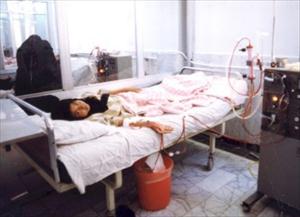
(Ahlul Bayt News Agency) - US officials had previously claimed that their sanctions on Iran over the country’s nuclear energy program were not targeting ordinary Iranians; however, the claim has been challenged by sanctions lawyers, who say the blacklisting of major Iranian banks has made it extremely difficult to find smaller banks able to carry out transactions for humanitarian goods.
Moreover, following the enforcement of a fresh round of tough US-led sanctions on the Islamic Republic late last year hospitals and pharmacies in Iran reported a widespread lack of drugs to treat special diseases such as cancer, multiple sclerosis, blood disorders and other serious conditions.
Facing international pressure, the US Treasury Department conceded on Thursday that its bans have created major challenges for pharmaceutical companies to conduct transactions with Iran.
The treasury department said it was now expanding the list of medical items that can be exported to Iran without a special application. Included in the new roster are equipments such as electrocardiograph and dialysis machines whose export needed prior approval.
David Cohen, the Treasury's undersecretary for terrorism and financial intelligence, said the policy shift was intended to “ease lingering concern about the export to Iran of medicine and medical equipment," adding, “"Safeguarding humanitarian trade is an important element of our policy (towards Iran)."
Iran has repeatedly protested that the US-engineered sanctions are hurting ordinary Iranian citizens.
In a letter to the UN Secretary General Ban Ki-moon in August, head of Iran's Charity Foundation for Special Diseases urged Ban to prevent sanction-induced harm to six million Iranian patients suffering from such intractable diseases as thalassemia, hemophilia, kidney conditions, multiple sclerosis (MS), cancer, etc.
The letter stated that shortage and increased price of medicine caused by illegal sanctions have directly affected the lives and well-being of millions of patients.
At the beginning of 2012, the United States and the European Union imposed sanctions on Iran’s oil and financial sectors aimed at preventing other countries from purchasing Iranian oil and conducting transactions with the Central Bank of Iran. The sanctions came into force in early summer 2012.
On October 15, the EU foreign ministers reached an agreement on another round of sanctions against Iran.
The illegal US-engineered sanctions were imposed based on the unfounded accusation that Iran may be pursuing non-civilian objectives in its nuclear energy program.
Iran rejects the allegations, arguing that as a committed signatory to the Non-Proliferation Treaty and a member of the International Atomic Energy Agency, it has the right to use nuclear technology for peaceful purposes.
/149



