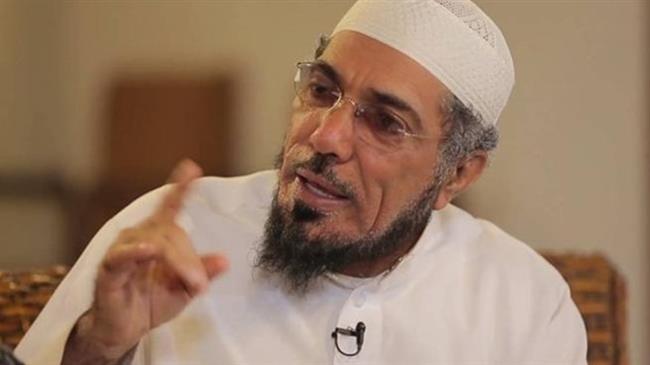
AhlulBayt News Agency (ABNA): A Britain-based human rights organization has called on world leaders to pressure Saudi Arabian authorities to release prominent dissident Sheikh Salman al-Ouda.
The Arab Organization for Human Rights in the UK (AOHR UK), in an open letter released on Saturday, described 64-year-old Ouda as one of the most popular scholars in Saudi Arabia and the Muslim world.
He has advocated for reforms in Islamic discourse and campaigned for political participation, especially in Saudi Arabia.
Ouda, the letter said, has faced persecution by successive Riyadh regimes for his peaceful campaign for reforms in the ultra-conservative kingdom.
Saudi Arabia’s so-called State Security interrogators, the AOHR UK said, have mistreated the dissident clergyman in detention and deprived him of sleep and necessary medications.
The organization went on to say that Ouda has been held incommunicado and deprived of contact with the outside world during his detention in maximum-security Dhahban and al-Ha'ir prisons.
The cleric informed his family last November that a doctor told him he had lost half of his vision and half of his hearing. His condition is deteriorating due to medical negligence, the letter said.
The AOHR UK finally urged world leaders to take decisive measures to secure Ouda’s release and enable him to access proper medical care.
Ouda is being held in al-Ha’ir prison, which is housing an estimated 5,000 prisoners. He has routinely been denied medical treatment, according to his son.
Saudi newspaper Okaz reported on September 4, 2018, that public prosecutors had charged Ouda on 37 counts, and even demanded his execution.
Saudi authorities detained the prominent Muslim scholar on September 7, 2018, holding him in solitary confinement ever since. Officials have imposed travel bans on members of his family as well.
A family member told Human Rights Watch that the distinguished cleric was being held over his refusal to comply with an order by Saudi authorities to tweet a specific text to support the Saudi-led blockade of Qatar.
Last month, Saudi Arabia, the United Arab Emirates, Bahrain and Egypt signed a declaration on the eve of the Persian Gulf Cooperation Council leaders’ summit in the ancient desert city of al-Ula, to ease a rift with Qatar, signaling the end of a three and a half year embargo of the energy-rich country.
In June 2017, the four countries accused Qatar, among other things, of supporting “terrorism” and having close ties to Iran, and severed economic and diplomatic ties. A blockade was also imposed by the four countries.
Qatar repeatedly denied the claims and said there was no justification for severing relations.
........................................
End/ 257
14 February 2021 - 10:45
News ID: 1115202
A Britain-based human rights organization has called on world leaders to pressure Saudi Arabian authorities to release prominent dissident Sheikh Salman al-Ouda.