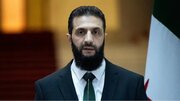
Jolani, the self-proclaimed president of Syria, rejecting accusations of military involvement in Lebanon, described Donald Trump's statements as a "misunderstanding." Emphasizing Syria's positive role in rebuilding Lebanese institutions and ensuring regional security, he announced his readiness to engage in dialogue with all Lebanese forces, including Hezbollah, for the sake of the country's stability.
At least three protesters from Syria’s Alawite minority were killed on Sunday as demonstrations erupted in several cities, according to monitoring groups.
Abu Mohammad al-Jolani, the self-proclaimed leader in Syria, said that the Israeli regime has conducted more than 1,000 airstrikes and around 400 ground incursions into Syrian territory.
The United States has submitted a draft United Nations Security Council resolution that calls for lifting sanctions on Abu Mohammed al-Jolani, the head of the HTS-led regime in Syria, ahead of his meeting with President Donald Trump at the White House on November 10.