

ABAN24 - More than 100 international humanitarian, human rights, and civil society organizations have warned that the ceasefire agreement in the Gaza Strip has failed to end Palestinian suffering. One year after taking effect, the agreement remains largely symbolic, offering civilians little protection as Israeli killings continue, the humanitarian catastrophe deepens, and restrictions on humanitarian aid and reconstruction materials persist.
In a joint statement issued Friday, the organizations said Israeli forces had killed more than 1,400 Palestinians, including at least 327 children, since the ceasefire began. They warned that killing and deprivation in Gaza must not become normalized under the cover of a ceasefire.
The organizations reported that approximately two million Palestinians still need shelter, none of Gaza’s 36 hospitals is fully operational, and around 1.4 million people face crisis-level or worse acute food insecurity.
One year after agreement: Killings continue, protection remains absent
The organizations said Israeli airstrikes, gunfire, and military operations had killed more than 1,400 Palestinians over the past year, demonstrating that civilians continue to face grave danger despite the declared ceasefire.
They added that Palestinian families and rescue teams had recovered hundreds of victims’ bodies from beneath the rubble, often using their bare hands, because Israeli restrictions have prevented the entry of heavy machinery and equipment needed to clear debris and reach missing people.
Many victims remain buried beneath destroyed buildings as search-and-rescue teams struggle with severe shortages of equipment. Restrictions on essential machinery continue to obstruct recovery operations, leaving countless families waiting to learn the fate of their loved ones.
In a development that has further heightened concerns about conditions on the ground, the organizations said the Israeli military had pushed the so-called “Yellow Line” deeper into Gaza, beyond the withdrawal line established under the agreement. This has confined Palestinians to an increasingly restricted and overcrowded area.
Widespread destruction leaves millions without shelter
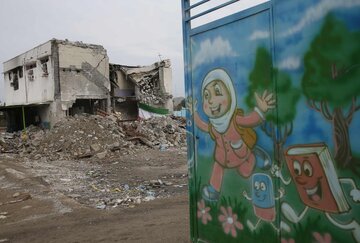
Recent satellite imagery has revealed the devastating scale of destruction across the Gaza Strip, where entire neighborhoods have been reduced to rubble. More than 80% of structures have been damaged, with approximately two-thirds completely destroyed.
As winter approaches, hundreds of thousands of Palestinian families remain in tents, temporary shelters, or damaged homes, facing the growing threat of cold weather, heavy rainfall, and flooding. The lack of adequate shelter and shortages of materials needed to repair damaged buildings threaten to deepen their suffering.
The organizations noted that female-headed households account for approximately one-quarter of families in Gaza, placing additional burdens on women struggling to provide for their families amid widespread displacement, economic instability, and shortages of basic necessities.
They also warned that Palestinian families have been forced to shelter inside buildings damaged by Israeli bombardment despite the danger of collapse.
In September, 21 Palestinians, including 12 children, were killed when a damaged building collapsed in Gaza City, according to the statement.
Such incidents demonstrate that civilians continue to face life-threatening dangers even in places where they seek refuge, while the absence of safe housing alternatives leaves many families with little choice but to remain inside structurally unstable buildings.
Gaza’s children continue to pay the price
Inger Ashing, chief executive officer of Save the Children, said the ceasefire loses its meaning as long as children continue to be killed and families remain unable to rebuild their lives.
She noted that the rate of children killed since the agreement was announced has approached one child per day.
Ashing called on governments that supported the ceasefire agreement to use their influence to stop the killings and ensure Palestinian children have access to food, healthcare, shelter, and education.
She emphasized that children have the right to live safely and to have a future free from the continuing cycle of loss and deprivation.
Her warning comes as living conditions continue to deteriorate, the needs of displaced children and families grow, and restrictions on humanitarian aid and essential supplies make it increasingly difficult to restore even the most basic conditions necessary for daily life.
Gaza’s healthcare system on the brink of collapse
The organizations warned that Gaza’s hospitals continue to operate under extremely difficult conditions, with severe shortages of medicines, medical supplies, equipment, and fuel threatening the lives of patients and wounded Palestinians.
These shortages have severely limited healthcare workers’ ability to provide essential treatment.
Newborns requiring incubators, patients dependent on oxygen or intensive care, older people, and persons with disabilities face growing risks because of the limited availability of specialized medical services, rehabilitation, and long-term care.
According to the joint statement, more than 18,500 patients still require medical evacuation outside Gaza, including at least 4,000 children.
More than 1,000 patients have died while waiting to be evacuated for treatment.
These figures highlight the devastating consequences for patients whose medical conditions require specialized services that are no longer available inside Gaza.
Restrictions on medical evacuations, combined with shortages of equipment and medical supplies, continue to prevent thousands of patients from receiving essential treatment in time.
Hunger and contaminated water deepen the humanitarian catastrophe
The organizations warned that approximately 1.4 million Palestinians are expected to face crisis-level or worse acute food insecurity through the end of the year, as restrictions on humanitarian aid continue and economic and living conditions deteriorate.
They also highlighted the growing health risks associated with unsafe drinking water and destroyed sewage systems, which are contributing to the spread of preventable diseases.
Children, older people, and those already suffering from medical conditions are particularly vulnerable to these threats.
The organizations stressed that the combined shortages of food, shelter, healthcare, and safe water are depriving Palestinian families of the most basic necessities of life.
They warned that meaningful recovery will remain impossible without the sufficient and regular entry of humanitarian assistance, medical supplies, and reconstruction materials.
Calls for accountability and an end to impunity
The organizations said the continuing killings, deprivation, and destruction demonstrate that the conditions underlying the findings of the United Nations Independent International Commission of Inquiry remain in place.
In September 2025 and June 2026, the Commission concluded that Israel had committed genocide in the Gaza Strip.
Amnesty International Secretary General Agnès Callamard stressed that accountability must not be buried beneath the rubble, emphasizing that Gaza’s recovery and future cannot be separated from international law, justice, and the rights of victims.
Callamard warned that the continued failure to hold Israel accountable and pressure it to comply with the binding orders issued by the International Court of Justice was contributing to the continuation of widespread crimes against Palestinians.
The organizations concluded that international responsibility does not end with the signing of a ceasefire agreement.
Instead, governments must take concrete action to stop the killing of civilians, lift restrictions on humanitarian aid, medical supplies, and reconstruction equipment, protect Palestinians, and establish the conditions necessary for recovery and rebuilding.
One year after the agreement took effect, the figures and documented conditions show that the ceasefire has failed to translate into meaningful protection for Gaza’s population.
The continued killing of Palestinians and the scale of humanitarian suffering have placed the international community before a critical test: whether governments can turn political commitments into concrete measures that end Palestinian suffering and guarantee their fundamental rights.
/129



Your Comment