

Iranian President Masoud Pezeshkian has said US actions have diverted the path of diplomacy toward threats, pressure, and sanctions, stressing that meaningful negotiations require an end to war and guarantees that hostile actions will not be repeated.
In a phone call Wednesday evening, Pezeshkian and French President Emmanuel Macron discussed recent regional developments, the progress of diplomatic negotiations, and strategic issues including the security of the Strait of Hormuz.
Pezeshkian welcomed France’s diplomatic engagement, saying Tehran appreciates Paris’ efforts to address international issues through dialogue. He added that Iran has consistently supported diplomatic solutions and constructive engagement.
He also pointed to growing distrust toward Washington, noting that Iran entered negotiations with the United States on two occasions but was faced with military attacks during the negotiation process. Such actions, he said, were perceived in Tehran as a stab in the back.
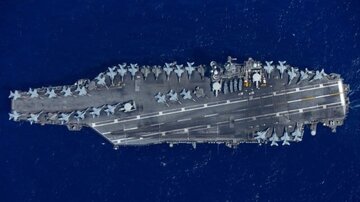
Discussing regional security, Pezeshkian emphasized Iran’s longstanding role in maintaining stability in the Strait of Hormuz. He said that the United States is undermining security in the strategic waterway through actions such as naval blockades and the seizure of Iranian vessels, describing them as violations of international law and disruptions to global trade.
He said Iran remains ready to resolve issues within international legal frameworks and seeks only the protection of its legitimate rights. However, he stressed that any negotiations regarding the full reopening of the Strait of Hormuz must include the lifting of US naval restrictions.
Pezeshkian also rejected claims that Iran had carried out military action against the United Arab Emirates, saying Iran’s Armed Forces would clearly announce any such operation if it had happened. He further called on regional countries not to allow their territory to be used against Iran.
The Iranian president criticized the Israeli regime for repeatedly violating ceasefire agreements through continued attacks on Lebanon, stating that the regime has not adhered to ceasefire commitments, similar to its conduct in the Gaza Strip.
He said the international community has largely remained a bystander to continued aggression and violations, adding that under such circumstances Lebanon’s resistance forces act within the framework of defending their country and people.
Addressing past diplomatic experiences, Pezeshkian said US obstruction has repeatedly hindered progress in negotiations. He referred to earlier talks between Iran and France in New York, saying that despite reaching preliminary understandings, US interference prevented further advancement. He also criticized European countries for activating the snapback mechanism last year, which he said imposed additional pressure on Iran and shifted diplomacy away from constructive engagement.
Pezeshkian said Iran has acted with sincerity in its dealings with Europe but has not received reciprocal behavior.
Macron, for his part, reaffirmed France’s support for diplomatic efforts, emphasizing the importance of a ceasefire framework and the reopening of the Strait of Hormuz through dialogue. He acknowledged that actions such as the US naval blockade and Israeli attacks on Lebanon constitute violations of the ceasefire.
He also expressed France’s readiness to assist in negotiations, contribute to efforts aimed at lifting sanctions, and support multilateral guarantees to achieve lasting regional peace.


Your Comment