

ABNA24 - As the US announces the ceasefire extension unilaterally, the world community has its questions about if a comprehensive deal will be reached and tensions give place to stability, or the unsettled issues, especially Iran's missile program and Strait of Hormuz closure, will push the region to a rejuvenated military conflict.
Alwaght News has arranged an interview with Ahmad Zarean, a West Asia political affairs expert and head of Tehran-based Andisheh Sazan-e-Nour Institute for Strategic Studies, asking him questions on these issues.
Q: Having in mind that Iran after war controls the Strait of Hormuz smartly and the US imposes its blockade on Iran to press Tehran for concessions, where will the situation in the strait go? Is there a possibility it will reopen in the near future? If yes, how will this be?
Zarean: After the American-Zionist aggression against our country and the martyrdom of the Supreme Leader of the Revolution, high-ranking commanders and officials, and a number of innocent people, the Islamic Republic of Iran, as it had announced before the enemy's aggression, attacked American interests and assets throughout the region as well as deep within the occupied territories. Simultaneously with this action, the matter of managing and controlling the Strait of Hormuz was also placed on the agenda, with the goal that hostile countries and governments cooperating with the enemies would not be able to transit through this strait.
These two developments, namely the regionalization of the war and the Islamic Republic's control of the Strait of Hormuz, put the United States in a very difficult situation. In addition to creating a global energy crisis, the Americans also found themselves in a state of moral, reputational, and military defeat.
A few days into the war, they concluded that they could not destroy Iran militarily or achieve their objectives in Iran, which were to dominate energy resources and bring about social, political, and territorial disintegration and collapse in Iran. Therefore, they sent messages for a ceasefire, but Iran did not pay attention to these messages because our conditions were not met in them, and the Americans wanted to enter negotiations from a position of strength. However, when the Americans accepted Iran's ten conditions as the basis for negotiations, and under circumstances where Iran had reached the peak of its achievements, we accepted the ceasefire, on the condition that, in addition to observing the ceasefire against Iran, the war on all fronts in the region, especially in Lebanon, would stop. Also, that Iran's blocked assets would be released.
In reality, Iran accepted the ceasefire under the influence of these conditions, but the Americans, in coordination with the Zionist regime, announced from the very beginning that Lebanon was not part of the ceasefire. They also essentially sabotaged Iran's ten conditions, saying that American conditions should be the basis for negotiations, and with this trick, they tried to undermine Iran's conditions.
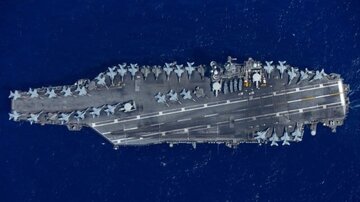
The third factor was maritime blockade of Iran by the United States. Immediately after failure of Islamabad talks, Trump announced the blockade of Iranian ports. All these drove Iran to the decision to once again put on its agenda strict control of the Strait of Hormuz. Actually, if we keep the strait open and on the opposite side the Americans keep the blockade in place, it would be as if the strait is open to all except for Iran, and nobody in their right mind will accept this.
On the other side, the Americans sought to secure a pressure lever for any future negotiations—given that, at present, they hold virtually none. Naturally, the Islamic Republic's calibrated response of tightening its grip on the Strait of Hormuz serves to neutralize the American blockade and squeeze the enemy until the siege is lifted.
Under the current trajectory, the reopening of the strait hinges entirely on an end to the naval siege of Iran and a halt to harassment of Iranian vessels. Should the Americans persist with the maritime blockade, or repeat provocations akin to the seizure of the oil tanker Tosca, Tehran will respond in kind. First, the Strait of Hormuz will remain sealed. Second, Iran will not hesitate to execute retaliatory and confrontational strikes against enemy shipping, both military and civilian, should efforts to break the blockade require it.
Tehran's next move now depends squarely on Washington. If the United States ceases its aggressive and malign actions against Iran, the calculus may shift. But so long as the naval siege endures, or if Washington violates the Lebanon ceasefire or reignites a war against Iran, the strait will stay firmly shut.
Q: Now the ceasefire has ended and the mediators are pushing for second round of talks between Washington and Tehran. But given the hostile American stances, Iranian officials do not confirm their intention to attent talks in Islamabad. Given this, do you think Iranian officials will agree to sit with the Americans who are insisting on their excessive demands? Should the mediators succeed to persuade Iran to attent the talks, what would Iran's conditions be to Washington?
Zarean: As long as the Americans talk from the position of superiority and push to dictate their demands on the Iranian side, there will be no negotiations. The Islamic Republic’s basis for attending the talks is the 10-point proposal it presented in the first round. If the Americans had not agreed, we would not have come to the table in the previous round either. Actually, Washington has made it abundantly clear just how steeped it is in deception and duplicity when it comes to negotiations.
Consequently, the Islamic Republic will not return to the negotiating table until the roadblocks to dialogue are removed. Iran's conditions for talks with the United States remain crystal clear, the same ten terms laid out previously. Chief among them: Washington must cease its threats against Iran entirely. Tehran refuses to be trapped in a vicious cycle of war, negotiation, and renewed war.
This round must stand as the final war of aggression waged by the American-Zionist enemy against Iran. That is the fundamental precondition for Tehran's presence in any future talks: a firm US guarantee of non-aggression. Moreover, that guarantee must be endorsed and verified by major world powers and international bodies.
Critically, lifting the shadow of war from Iran must also entail the removal of threats from all allied nations, most notably Lebanon and Hezbollah. Beyond that, the unjust sanctions regime must be dismantled, allowing Iran full access to the global economy, the international banking system, and unrestricted export capacity so that it may conduct its economic affairs without hindrance.
Further stipulations include the release of all frozen Iranian assets and the establishment of a clear mechanism for reparations. Iran's sovereign right to manage, control, and administer the Strait of Hormuz, which is a right Tehran is currently exercising, must also be formally recognized. Under Iranian stewardship, the strait's security and the safe passage of innocent shipping can be effectively guaranteed.
Furthermore, shipping in the Strait of Hormuz should not be detrimental to the Iranian interests. Indeed, if these essential conditions are approved, we can talk about the privileges we can provide to the American side, indeed, we entertain advantages that do not destroy our sources of power and our infrastructures. After all, negotiations mean giving and taking, and if we get these privileges, we can show some flexibility.
Beyond Iran's stated conditions, which must serve as the agenda for any talks, the United States is obliged to adhere to several additional principles at the negotiating table. First, should Washington choose to participate as a proxy for the Zionist regime during discussions, the dialogue is inherently doomed to collapse. Tehran is fully aware that Israel seeks the annihilation of Iran and will not tolerate a hegemonic power in the region. The entity aims to dismantle the Islamic Republic, weaken Turkey and Saudi Arabia, and fundamentally eradicate regional powers in order to rise as a leading force.
Therefore, the United States must engage realistically at the table, because it secured no gains in the military conflict that it now seeks to convert into concessions during the talks. Over the course of this 40-day war, by the admission of both allies and adversaries of the Islamic Republic, alongside neutral analysts, the United States has been defeated, and thus this country cannot unilaterally extract advantages from the negotiating table.
The Americans must forge a correlation between their assets and their demands, and their requests in the dialogue should align with the accomplishments of their military forces. Naturally, since Washington has achieved no victory in this conflict, it is unable to solicit strategic concessions, yet the methodology of the United States typically involves entering discussions to secure objectives that alternative channels could not fulfill at the bargaining table. Consequently, if the Americans approach with this dual reality, meaning by proxy for the Zionist regime during the talks, then the negotiations are predestined to fail.
Q: If the mediators make no progress, is Iran ready for renewed war? What arrangements have been made by Tehran? How will the second part of war be different from the first one?
Zarean: Concerning the fate of this confrontation and whether there will be ceasefire extension, I must say that like 40 days of war, we can continue war, and that we did not accept the ceasefire out of weakness. So, if the Americans want to start the war afresh, we are ready and as our commanders said, we have used this ceasefire to mend our damages and also enhance our fire power and air defenses.
So, Iran is ready and actually the people in the streets have not happily accepted fire when ceasefire was announced. They are morally ready for a strong response if aggression on our country restarts. If the Americans want to escalate, we are ready for reactions at a painful level.
The Islamic Republic is not afraid to escalate and if the enemies want to damage Iran's infrastructures, it will strongly attack infrastructures of countries helping the United States and plans have already been laid.
Q: What achievement for Iran and defeats for the US has this war had?
Zarean: On the international stage, this war sharply accelerated the downward trajectory of American power. The declarations by Trump and other US officials, vowing the destruction of a civilization and threatening strikes on Iran's infrastructure, stripped Washington of any remaining moral high ground. Its global standing lies in tatters. The United States military budget, roughly a hundred times larger than Iran's defense spending, was meant to project an aura of superpower invincibility. That aura shattered as America's hyper-mechanized, technology-reliant military buckled under the weight of Iran's low-cost drones and missiles.
Economically, the Americans have found themselves under immense strain, buckling under the weight of both direct war expenditures and, more critically, the indirect fallout of the global energy crisis they helped ignite.
Domestically, American public opinion turned fiercely against the administration, eroding Trump's electoral base. Internationally, nations across the globe condemned the aggression and pointedly refused to fall in line behind Washington's war effort, a stinging diplomatic rebuke that compounded the damage.
Within the region, the repercussions have been severe for those states that afforded Washington operational space. Their oil exports are now disrupted, choked off by the tightened restrictions on maritime traffic through the Strait of Hormuz. Even their food security is now in jeopardy.
In stark contrast to American array of failures, Iran's position has been fundamentally recast. The Islamic Republic has emerged from this war as a preeminent regional power. Many observers had predicted that Iran would be weakened following the fall of the Syrian government and its exit from Axis of Resistance orbit. Instead, Tehran has dictated its strength to the region, demonstrating beyond any doubt that it possesses the capacity to stand toe-to-toe with two declared nuclear powers, the US and the Israeli regime.
Regarding the regional countries, we have goodwill. They are our brothers, but since they provide security space to the Americans in their war against Iran, they sustained damage. We hope that these countries review their approaches and policies concerning allowing the presence of foreign sides, especially the US and Israeli regime, on their soil, and as before this war we observed the neighborliness policy, they should also observe the interests of the great people of Iran.
/129


Your Comment