ukraine
-

West Spent $600 Billion on Adventure in Ukraine
An advisor to the President of Russia, referring to the $600 billion spent by Western countries on the Ukrainian adventure, emphasized that Ukraine has passed the point of no return on the path to extinction, and that only Russia can save this country.
-

Friedman: Era of Superpower Military Superiority Coming to End
Thomas Friedman, a columnist for The New York Times, believes that the U.S. war against Iran has shown that the nature of military power in the world is changing.
-

Iran condemns Ukrainian attack on Iranian commercial vessel in Caspian Sea
Iranian Foreign Ministry strongly condemns the Ukrainian regime's attack on an Iranian commercial vessel in the Caspian Sea early Saturday morning—an incident that caused an explosion on the ship, resulting in the martyrdom of one sailor and injuries to another.
-

Washington's Biological Labs in Ukraine Produced Offensive Weapons
Scott Ritter, a former officer of the U.S. Marine Corps Intelligence unit and a military analyst, announced that U.S. biological laboratories in Ukraine have likely violated the Biological Weapons Convention by conducting offensive research, and this issue increases the risk of pathogen leakage, which will then be falsely attributed to Russia.
-

Former Pentagon Official: Western Policies Devastated Ukraine and Turned It into a "Dead State"
A former U.S. official warned that the continuation of rigid approaches by Washington and Brussels in foreign policy could lead to their global isolation, to the extent that other countries would be unwilling to engage with the West internationally and would regard it as an unreliable actor.
-

Zelensky Offers Help to UAE in Countering Iranian Attacks
Zelensky’s offer comes as Ukraine has been relying solely on NATO and US aid to sustain its war effort against Russia since the conflict began.
-
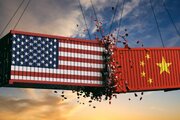
Ukraine at the Center of Great-Power Rivalry; Trump’s Strategy to Contain China Through the Russia Card
From Biden to Trump, U.S. foreign policy has been shaped by the goal of preventing China’s economic supremacy, turning the Ukraine war into a frontline in great-power competition.