

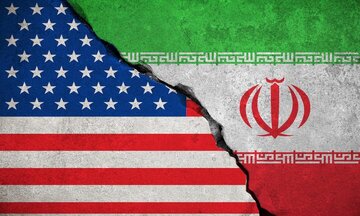
AhlulBayt News Agency: Security assessments now acknowledge that military threats and efforts to fuel internal unrest in Iran have failed, leaving U.S. strategy at a strategic dead end.
Recent assessments indicate that many of the United States’ key assumptions about Iran have not only failed to emerge but have instead led to a strategic impasse. Policies predicated on maximum pressure, military threats, and reliance on internal unrest have not produced the intended outcomes. Notably, even security analysts close to U.S. and Israeli circles have begun to acknowledge realities that were previously absent from official calculations in Washington.
Background and Context
In recent years, U.S. policy toward Iran has been constructed around three principal pillars: maximum economic pressure, the threat of military action, and a wager on sustained domestic unrest as a catalyst for internal change. However, according to emerging evaluations, these approaches have failed to deliver strategic results. Analysts now concede that several foundational premises underlying this strategy were flawed from the outset.
Assessment of Domestic Unrest in Iran
Within this framework, Dennis Citrinowicz, former head of the Iran desk in Israeli military intelligence and a specialist in security and Middle Eastern affairs, offers a realist assessment. He acknowledges that the most recent cycle of protests in Iran has effectively concluded and that, at present, there is no active, nationwide wave of unrest.
Contrary to narratives promoted by U.S. media and its allies, the latest round of widespread disturbances has ended. Any credible policy analysis, therefore, must begin from this reality rather than from political wishful thinking. While economic and social challenges persist, Western efforts to transform episodic unrest into a sustained project capable of altering Iran’s internal balance of power have, by the admission of these same analysts, failed.
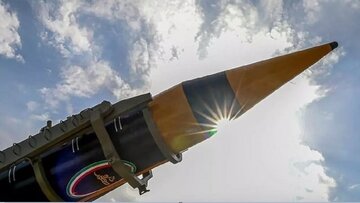
The Nuclear Program and the Limits of Military Action
Citrinowicz further addresses another central pillar of the U.S. confrontational strategy: Iran’s nuclear program. From his perspective, even within Western policy circles, there is now acceptance of the fact that no effective military solution exists to halt Iran’s nuclear activities. The U.S. withdrawal from the nuclear agreement and the subsequent intensification of pressure not only failed to stop the program but also contributed to the expansion of Iran’s technical capabilities.
Today, Iran possesses the knowledge and capacity required for high-level uranium enrichment—capabilities that cannot be eliminated or reversed through military action. This acknowledgment constitutes, in effect, an indirect admission of the failure of Washington’s confrontation-based policy.
Risks of War and the Erosion of Sanctions Strategy
The former head of the Iran desk in Israeli military intelligence also emphasizes that entering a war with Iran without a clear objective or exit strategy would be highly risky and strategically irrational. According to his assessment, despite deep mistrust of Iran’s governing structure, the United States effectively lacks viable options beyond continued economic and diplomatic pressure.
Sanctions, as the sole remaining lever, have increasingly become a war of attrition. Rather than compelling behavioral change, they have imposed growing human and economic costs without delivering a clear strategic gain for Washington.
Rejection of Regime Collapse Scenarios
In another part of his assessment, Citrinowicz explicitly rejects the notion that the Iranian political system could collapse through the removal or assassination of its leadership. He argues that analyses equating the elimination of the Leader with systemic collapse reflect a fundamental misunderstanding of Iran’s power structure.
Contrary to assumptions prevalent in some Western circles, the Islamic Republic is institutionally structured and not dependent on a single individual. Such actions could escalate the crisis from a political level to a religious and regional one, generating consequences far more dangerous for the broader region.
The “Opposition Illusion”
Citrinowicz also addresses what he describes as the “opposition illusion,” sharply questioning the role attributed to figures such as Reza Pahlavi, the son of Iran's deposed Shah. From his perspective, Reza Pahlavi lacks domestic social support, organizational capacity, and political legitimacy necessary to unify Iran’s fragmented opposition.
Slogans occasionally heard during protests do not necessarily indicate genuine support for the restoration of the monarchy; rather, they function largely as symbolic and protest-oriented expressions. He further notes that a significant portion of amplified narratives in social media is driven by a limited circle of supporters and does not reflect Iran’s internal social reality.
Conclusion
In concluding his assessment, Citrinowicz states that while internal developments in Iran may eventually lead to structural changes, this process will not be accelerated through U.S. military intervention nor through reliance on an opposition lacking real domestic influence. The primary danger lies in drawing the region into a broad military conflict with uncontrollable consequences—particularly at a time when there is neither active nationwide unrest in Iran nor a clear vision in Washington for the “day after.”
The acknowledgments made by this former Israeli intelligence official ultimately underscore the erosion of U.S. strategies and Washington’s inability to engineer outcomes in Iran.
/129


Your Comment