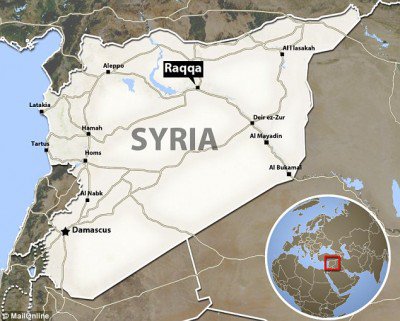
AhlulBayt News Agency - An Iranian minister said on Saturday that the so-called Islamic State has been hatching "plots and conspiracies" against Iran from its de facto capital Raqqa in Syria and has made several attempts to send "terrorist teams" into Iran.
Intelligence minister Mahmoud Alavi said in an interview with Lebanese television station al-Mayadeen that if Iran had not fought terrorism in Syria and Iraq it would have had to do so in Iran, justifying its continued role in the Syria conflict as a matter of national security.
The Iranian minister went on to say that the “plot against Syria” began when Damascus sided with the Lebanon's resistance movement Hezbollah on the Israeli aggression on Lebanon in July 2006.
During the 34-day war, known as the July War, Israeli regime waged a full-scale war on the Lebanese soil and killed some 1,300 people of the Arab country, displacing about a million others. The war also severely damaged Lebanese civil infrastructure.
“ISIS has attempted, several times, to send terrorist teams inside Iran,” Alavi further said, adding that the attempts were foiled and “all those terrorists were either annihilated or arrested during the past months.”
The Islamic Republic of Iran, which shares its western border with Iraq, has recently indicated it has sent commandos to Syria on advisory mission to support Syrian President Bashar al-Assad's fight against rebels and self-proclaimed Islamic state militants.
"Raqqa in Syria is one of the places where (ISIS) is plotting and making conspiracies against Iran," al-Mayadeen reported Alavi as saying.
Commenting on Tehran's relations with its allies, Alavi stressed that his country “does not weaken the protection of its allies”, and that they “are stronger than ever today and achieve victories day after day.”.
Syria has been gripped by foreign-backed militancy since March 2011. According to a February report by the Syrian Center for Policy Research, the conflict has claimed the lives of over 470,000 people, injured 1.9 million others, and displaced nearly half of the country’s pre-war population of about 23 million within or beyond its borders.
/129