-
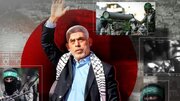
"Yahya Sinwar": An eternal legend in history of Palestinian people's struggles
Martyr "Yahya Sinwar", the late head of Hamas's political bureau, became an eternal legend for future generations through his exceptional performance at a critical juncture in the history of the Palestinian people's struggles against occupation.
-
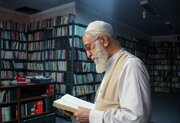
Imam Seyyed Ali Khamenei & culture of reading and studying
Imam Khamenei’s simple suggestion to include the culture of reading and studying in the Festival program proved insightful in carrying forward Iq’ra to posterity. The Imam’s belief was his very breath. His activities based on belief were the map-in-progress of his life – both intrinsic and extrinsic. His belief entailed life beyond sensory vision, hearing, smell, taste, and touch. It was heartfelt perception with deliberate reflection.
-
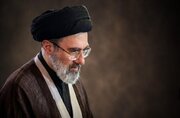
By: Dr. Amir Jalali
Elucidating strategic approach of Islamic Revolution Leader
Existing accounts of the personal and scholarly attributes of the Leader of the Islamic Republic of Iran depict a leadership style grounded in "knowledge" and "strategy."
-

Hajj Majed: One of the Resistance’s Early Pioneers
He was among the pioneers of the generation that founded the resistance. Hajj Mohammad Jaafar Qasir – Hajj Majed – joined the path of the mujahideen and took up the struggle against the occupiers of the land at an early age. From his hometown of Deir Qanoun Al-Nahr, the foundations of his identity as a resistance fighter began to take shape when,..
-
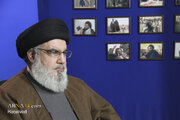
Two Years After Sayyed Nasrallah: A Resistance Idea That Did Not Die
Two years after the martyrdom of Hezbollah Secretary General His Eminence Sayyed Hassan Nasrallah, the region continues to grapple with the consequences of the absence of one of its most prominent resistance figures.
-
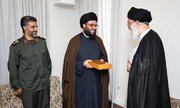
Sayyed Hassan Nasrallah: A Seminary Scholar and a Life of Resistance
Sayyed Hassan Nasrallah, the martyred secretary-general of Hezbollah, was drawn to religious studies and towering figures such as Imam Musa al-Sadr from his teenage years — a passion that led him to the seminary and shaped his dual identity as both a cleric and a resistance leader.
-

Sayyed Nasrallah’s Brother Speaks from the Heart: This Is What He Asked Us to Do
Two years have passed, yet the loss remains immense. To his brothers, the leader was a man almost impossible to describe, a brother who brought the family and the Sayyeds together. He was a familiar figure in the collective memory of the people; a leader known from countless public platforms, an eloquent orator whose words were etched into the memory of the resistance community...
-
The Yemen Sayyed Nasrallah Saw: From Resisting to Reshaping Region
The world saw bombs falling on Yemen. Martyred Lebanese Resistance leader Sayyed Hassan Nasrallah saw what lay behind them.
-
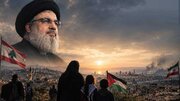
Outpouring of Your Martyrdom… Tempest of Transformation
Two years in the life of the Resistance have passed, yet they feel like an eternity, given the pain and challenges they have carried. It is as though fate has singled out our faithful people and the path of their Resistance for an intensive course of special preparation, commensurate with the role expected of them in confronting injustice and the unjust, corruption and the corrupt, occupations and occupiers, and the usurpation of rights and those who usurp them...
-
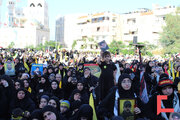
The Gathering That Says Itself: Two Years After Sayyed Nasrallah, Still Standing Beyond the Loss
Beirut – Two years after the martyrdom of Hezbollah Secretary General His Eminence Sayyed Hassan Nasrallah, the scene at his shrine in Beirut’s southern suburbs [Dahiyeh] was difficult to reduce to a single image.
-
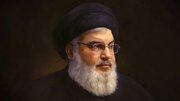
Second anniversary of Hezbollah Secretary General's martyrdom: Nasrallah's jihad path continues
On the second anniversary of the martyrdom of Sayyed Hassan Nasrallah, the late secretary general of Lebanon’s Hezbollah, many of his supporters gathered at the site of his martyrdom in southern Beirut’s Dahiyeh, stressing that his memory remains more alive than ever in their hearts and minds and that his path of jihad continues with strength
-

And You Remain Impossible to Erase
There you are, on this thirty-first day of August 2026, the inspiring Imam, forever present in the conscience of the honorable, in the minds of the upright, and in the hearts of the loyal. Your smiling appearance radiates splendor and warmth, nourishing the hearts of sincere, faithful lovers in a world filled with wolves, as you once described it—a world in which the deceitful..
-

-

Photos: Ceremony of Raising Flag of Najaf Ashraf Over Dome of Imamzadeh Taher (AS)
AhlulBayt News Agency: The ceremony of raising the flag of the Ivān of Najaf Ashraf over the dome of the Holy Shrine of Imamzadeh Taher (AS) was held with the presence of pilgrims, officials, and servants of the Holy Shrine of Hazrat Abd al-Azim al-Hasani (AS). The Shrine of Imamzadeh Taher (AS) is located to the northeast of the luminous shrine of Hazrat Abd al-Azim al-Hasani (AS).
-

From 'Epic Fury' to 'Fake Victory'
Trump is trying to find a dignified way out of the quagmire of war by making unrealistic claims about the results of negotiations with Iran
-

A tale of a pen fighting on the battlefield: front line on a blank canvas
When the siren wails across the city and the air in the media space becomes thick with the scent of war-news gunpowder, everyone picks up a weapon and stands at a corner of this vast front. One takes up a rifle; another adjusts their camera lens. And in this fray, there is an artist whose weapons are lines, colors, and meaningful, biting satires
-

Sassanian Persia’s forgotten victory: The tunnel of death in the Syrian Desert
The confrontation unfolded at Dura-Europos, a city on the Euphrates long held by the Roman Empire. By 256 CE, a new and aggressive power had risen in Iran. The Sassanian dynasty under Shapur I replaced the Parthians and pushed westward with relentless force. Shapur’s trilingual inscription at Naqsh-e Rostam (Ka'ba-ye Zartosht) records that during his second invasion of Syria, he crushed a Roman army and captured thirty-seven towns, among them Dura-Europos. After the siege, the city vanished from history for seventeen centuries.
-

-

Ali Larijani: Iran’s Martyr of the Humanities
Dr. Ali Larijani was precisely what former International Atomic Energy Agency (IAEA) Director General Mohamed ElBaradei recently called an «interlocutor». He is the kind of figure the world today is desperately short of. Mediators are those rare individuals who can navigate a world trapped in irreconcilable binaries and steer it toward peace. Our current global order is built on such binaries: they don’t reconcile, they keep fighting, and ordinary people end up paying the price. That dialectical, conciliatory spirit is familiar to anyone who knows German idealism, and it’s no accident that ElBaradei specifically mentioned Larijani’s four books on Immanuel Kant.
-

Our resistance is steadfast and unwavering
More than thirty days have passed since the third war imposed on Iran, and the third Sacred Defense is still ongoing. Days that were not only a difficult test for the people inside Iran, but also a field for measuring loyalties and exposing the true faces of many claimants abroad.
-

An Analysis of What Quran Says about Fighting Zionism
Street Presence; An Example of ‘Momentous Matter’ in Quran
“Amr Jami’ (Momentous Matter)” in the Holy Quran is any important work that requires the cooperation and presence of the people, and it is not permissible for anyone to leave the scene without the permission of the leader.
-

Censorship and Narrative Framing in Media Coverage of the U.S.–Israeli Attack on Iran
In times of international conflict and crisis, the media do far more than relay information. Through the processes of selection, prioritization, and framing, they play a decisive role in shaping public perceptions of unfolding events. In the era of global communications, public understanding of military crises is largely constructed through their media representation.
-

Shockwaves of war on Iran’s historical heritage
Following consecutive airstrikes by the United States and the Israeli regime from late February through the closing days of March, a number of Iran’s most important historical monuments and sites across multiple provinces have been damaged or destroyed.
-

Trump's assassination of Soleimani and Ayatollah Khamenei: A factor in his downfall?
The twentieth century began with the emergence of a new concept in terrorism studies and criminology within political science: a notion titled “gaining fame or attracting public attention through the assassination of an important figure.” The assassination of Abraham Lincoln by John Wilkes Booth in 1865, and the assassination of Archduke Franz Ferdinand by Gavrilo Princip in 1914, are often considered examples of this type.
-

Enemy and destruction of history
Why do you think Alexander set fire to Persepolis when he invaded Iran, or what benefit did the Mongols gain from burning our cities? The issue seems to lie in foundations and cultural manifestations. Setting fire to buildings and urban symbols is to set fire to a nation's
-

Nowruz in the shadow of war
This year, Nowruz does not feel the way it used to. Many things still look the same on the outside. The Haft-Seen table is ready, just like every year. There is green wheat, flowers, a mirror, a copy of the Holy Quran, and a glass bowl with small red fish swimming quietly
-

Nowruz in the midst of unwarranted war
Iranian citizens are celebrating the ancient Nowruz (the Persian New Year) while their country is under an illegal and borderless war by the United States and Israel.
-

The spirit of spring
This year, Nowruz was different. It is no exaggeration to call it the most unprecedented Nowruz in Iran’s contemporary history. The Persian year 1404 was a difficult and bitter one for Iranians. Early in the year, the country became embroiled in a 12-day war imposed by the United States and Israel, during which more than a thousand honorable Iranian citizens lost their lives and became victims of the lies, ambitions, and crimes of those two regimes.
-

The messages of the first message
The first message of the Ayatollah seyed Mojtaba Khamenei, the new Leader of the Islamic Revolution, was issued in the right time.
-

Success in Divine Tests: Prerequisite for Final Victory over Enemy in Quran
In the Quran’s account of the battle led by Talut, ultimate victory comes only after a series of divine tests in which the believers are filtered through trials of loyalty to divine authority, attachment to worldly desires, and fear of anything other than God.