

ABNA24 - The dead end the US and Israel are facing because of their defeat in the 38-day aggression on Iran has pushed the White House leaders to a new idea to press Tehran. This idea is a blockade of all of the Iranian ports in the Persian Gulf, in effect since Saturday. However, many argue that this decision not only does not help the US President Donald Trump in his war on Iran, but also will push the fuel and energy prices even higher than the current surging levels, doubling the crisis for the US itself and the European countries.
First signs of crisis intensification
Trump’s remarks about imposing a naval blockade on Iran quickly rippled through global fuel markets, with the first signs of a deepening energy crisis emerging in Asia. According to reports, Washington’s threat, part of its increasingly aggressive, conflict‑driven Middle East policy, to blockade the Strait of Hormuz pushed Asian LPG prices higher, sending markets upward on Monday. Asia‑Pacific equities, meanwhile, fell, reflecting investor anxiety after US–Iran talks in Islamabad failed to produce a deal and Trump threatened a shutdown of the vital waterway.
Crude prices also surged after the fruitless negotiations and as the US moved toward restricting maritime traffic in Iranian ports. West Texas Intermediate jumped 8.54 percent to 104.82 dollars a barrel, while Brent climbed 7.27 percent to 102.51 dollars.
Losses in European markets
The consequences of the US decision to blockade Iran were not limited to Asia, and Europeans are also being hit, too. Reuters reported that European chemical producers, despite repeatedly raising the prices of their products, are facing lower first‑quarter revenues as energy and raw‑material costs continue to surge, driven by the ongoing conflict involving the US and Israel against Iran. The report says a two‑week ceasefire will offer only short‑lived relief. European chemical companies are expected to post weaker results in their first‑quarter earnings, reflecting the deep impact the conflict has had on Europe’s industrial sector.
Germany’s chemical industry association (VCI) also stated that the chemical sector, more than other industries, has been hit hard by the sharp rise in energy and feedstock costs, as it relies heavily on oil and gas as raw materials. As a result, many German chemical companies have raised their prices, some of them multiple times across different product categories. Anna Wolf, an industry expert at Germany’s IFO economic institute, said higher prices are further eroding the competitiveness of European producers against their Chinese suppliers.
Reuters notes that although the two‑week ceasefire has eased some immediate pressure on energy markets, overall costs and volatility remain elevated.
International media, including CNBC18 and Bloomberg, have reported that the natural gas prices have climbed up to 18 percent in the Monday dealings, as gasoline prices rose by 17 percent. Data published show that diesel has grown higher than other energy types, experiencing a 30-percent rise in recent weeks. Economists suggest that this is because Europe is dependent on diesel imports from major suppliers. While the continent is self-sufficient in gasoline production, it imports nearly half of its diesel from Middle East, where transit routes are closed now.
Trump acknowledges gasoline prices volatility
Fuel prices in the US have also been under severe pressure, and Trump’s threats of a naval blockade against Iran have only added to the strain. Shortly after issuing his claimed order for a blockade of the Strait of Hormuz, Donald Trump acknowledged in an interview that gasoline prices would remain high through November, when the midterm elections take place, and could even rise further. It was a rare admission of the potential political consequences of his February decision to strike Iran and his more recent move toward a naval blockade.
According to GasBuddy data, the average price of gasoline at US pumps has exceeded 4 dollars per gallon on most days in April. By contrast, the average price in February was just under 3 dollars per gallon, and at no point last year did it rise above 3.25 dollars. Analysts expect that Trump’s proposed blockade of Iranian ports in the Persian Gulf could push fuel prices even higher.
Trump's difficult job of blockading Iran
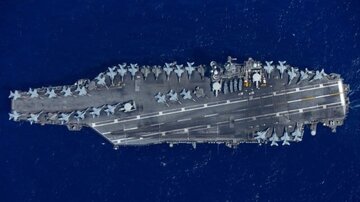
With Trump announcing that he is imposing the maritime blockade on Iran, a question presents itself: Is his hand open for blockading Iranian ports?
1. Energy crisis in the US and across the world: The energy crisis is not limited to the US and Europe but it is affecting Africa and Australia, too. Actually, Trump's war and blockade on Iran has globalized the energy crisis. Indeed Iran has a precious experience of dealing with severe oil sanctions and during Trump's first term, Tehran's oil exports fell to 300,000 barrels per day from 2 million, but the Iranian government could finally manage the situation. Now, too, it seems that even if Washington blockades Iran's oil shipments, Tehran has its ways of circumventing the blockade.
2. No international coalition with Trump: Trump faces a major obstacle in pursuing a naval blockade of Iran: he has failed to bring other countries, including key European partners, on board. Keir Starmer, the British prime minister and Washington’s closest European ally, has announced that Britain will not support a naval blockade of Iran in the Persian Gulf. France and Germany have taken similar positions, and Spain has warned that it will veto any NATO involvement in military operations in the Persian Gulf, preventing the alliance from entering a conflict there. The lack of an international coalition has therefore become a significant challenge for the US in attempting to enforce a naval blockade of Iran in the Persian Gulf and the Gulf of Oman.
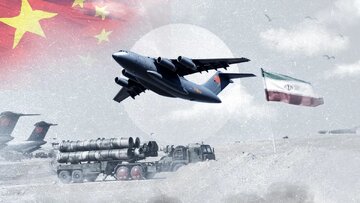
3. Allies stand by Iran: It should be taken into account that Iran, in association with its allies like China and Russia, will circumvent the naval blockade of the Persian Gulf and Sea of Oman. Iran can send its oil shipments abroad through the Caspian Sea via Russia, as it can access China via Afghanistan. So, American maritime blockade of Iran does not mean full restriction of Iranian trade routes. After all, Iran has various borders with its neighbors, a geographic advantage opening Iran's hands to bypass the US-imposed blockade of the Persian Gulf.
/129

Your Comment