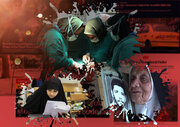
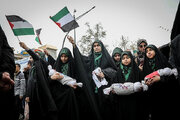
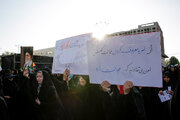
For several years, the issue of hijab and its legal status for Iranian women has been a constant topic in political, intellectual, and human rights circles connected to Iran. Since the online campaigns that began in 2017, the subject has rarely left the media space. Every few days, a major outlet publishes an article, broadcasts a documentary, or produces news coverage that keeps the issue alive in public attention.
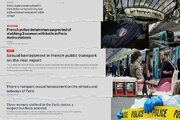
“The fact a woman or girl changes her timetable or route for fear of being attacked should make us question the freedom of access of all citizens to the public transport service.”
These words, spoken by former French Sports Minister Roxana Maracineanu, expose a harrowing truth concealed beneath the polished façade of France’s cities and streets.
The Fourth National Women's Media Festival, titled Harim Resalat, has officially opened submissions for its 2025 edition, inviting participants to explore the multifaceted role of women in shaping Islamic society through media and storytelling.
The Tehran Municipality’s Center for Women and Family has unveiled a research proposal examining the role of women and families in the Arbaeen procession, one of the world’s largest religious gatherings.
The West’s enmity toward hijab is a confrontation deeper than a mere disagreement over clothing. The hijab of the Muslim woman, symbolizing a religious duty, faith, and dignity, is portrayed by the West as a sign of oppression and a restriction on freedom. The West’s efforts to change the way Muslim women dress stem from colonial policies and schemes aimed at globalizing Western values. This confrontation consists of two entirely opposing fronts: one is based on the West’s colonial model, ..