-
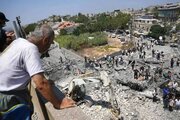
Paper: What’s the Strategic Significance of Lebanon’s Ali Taher Heights?
In today's wars, seizure of heights necessarily does not mean ultimately winning the conflict. But its significance becomes clear when the location is used to establish intelligence superiority, control military movement routes, and impose costs on the opposite side. Meanwhile, Ali Taher heights in southern Lebanon, which are a flash point these days, are more a broader geographical-military network than a single military target.
-
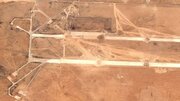
Paper / Ankara and Tel Aviv: Is Syria a Potential Ankara-Tel Aviv Clash Ground?
While President Recep Tayyip Erdogan of Turkey nurtures his neo-Ottoman dream leadership, complete with potentially performing prayers at Damascus’s Umayyad Mosque, Israeli regime has turned that dream into a jumbled nightmare, upending Turkey’s calculus for the new Syria.
-
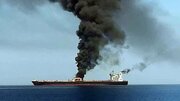
Paper / From Red Sea to Black Sea: Geopolitical Impacts of Ukraine’s Attack on Iran’s Ship in Caspian Sea
The attack on an Iranian commercial cargo vessel in the Caspian Sea on Saturday could mark the opening of a new chapter in the broadening conflict between Iran and the US-Israeli coalition and the emerging coalitions forming around it.
-
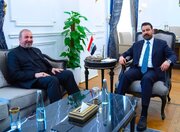
Paper: What’s Agenda of Iraqi PM’s Tehran Visit?
Iraqi Prime Minister Ali al-Zaydi’s trip to Tehran today is far more than a routine diplomatic visit between neighbors. Scheduled in the first months of Baghdad’s new government, in line with Iraqi political tradition, the visit underscores that Iran remains a decisive factor in Iraq’s strategic calculations, and that no administration in Baghdad can stabilize its foreign policy without first recalibrating ties with Tehran.
-
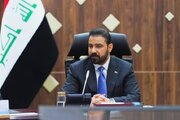
Paper: Iraq at a Critical Juncture in Relations with US
The new Iraqi Prime Minister Ali al-Zaydi who has recently made an important political and propagandistic splash by his daring, unprecedented anti-corruption campaign, this time has broken the tradition choosing the US as the first destination of his first trip since he took the office later in April. He flew to Washington to meet the US President Donald Trump on Monday, a move aimed at highlighting the importance of the relationship between the US and Iraq and also securing Trump's support for the new cabinet.
-
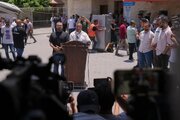
Paper / Hamas Gaza Govt. Dissolution: Aims and Effects
Months after the ostensible end of the war in Gaza, the coastal enclave's reality keeps to be a far cry from the post-war revival promised under the Sharm el-Sheikh agreement and reconstruction, return to pre-war normalcy, and economic renewal remain elusive. Against that backdrop, Hamas’s announcement that it is dissolving its government in Gaza has ushered the territory’s political dynamics into a new historical phase. The move appears directly tied to the stalled progress of the Sharm el-Sheikh deal.
-

Paper: A Ticking Bomb in Beirut: What’s Behind Israeli-Lebanese Deal?
After five rounds of Israeli-Lebanese talks in Washington, the two finally struck a deal on Friday. The agreement was fast to cause outrage in Lebanon, with the people, especially the Shiite citizens, going furious at the government for its commitments under the deal.
-

Paper: Four Strategic Messages of Iran’s Missile Strikes at Israel
The IRGC’s missile strikes at Israeli regime last night and this morning that came in realization of threat to respond to the Israeli aggression against southern Lebanon were not a simple military action, rather, they carried a message of state of Iranian military readiness, the way of Iran's use of two ceasefires for rebuilding its military power, and also a transformation of the operational doctrine of the Axis of Resistance.
-

Revisiting US-Iran role projection: An emerging "self" vs. a tarnished "image"
The new war imposed on Iran by the U.S. and Israel has changed the international role of the countries to a great extent. In this analysis we are going to revisit this new role projection from a scientific point of view in the light of role theory in international relations.
-

Paper / Eurasia Amid Iran War: Economy, Security and Rivalry of Corridors
While the US-Israeli war on Iran has drawn the whole world attention to the Persian Gulf as the heart of the tension, this war has its impacts going beyond the borders of conflict, fundamental impacts that can seriously alter regional orders in mid terms.
-

Paper: The Picture Martyr President Raisi Drew to Talk to Today’s World
As Iran marks the second anniversary of its late President Sayyed Ibrahim Raisi, time is fit for shedding light on some of his measures and policies that are related to the current conditions.
-

Paper: Iraqi Parties Locked in Intense Negotiations for Bigger Cabinet Share as New PM Starts Talks
Two weeks after election of Iraqi prime minister, politician factions are pushing to consolidate their share and position in the new government, something making Baghdad, Erbil, and Suleimanyeh scenes of political horse-trading.
-

Paper: Araghchi’s Mission in Beijing amid Hormuz Strait Blockade and Energy Crisis
As a new wave of tensions has started between Iran and the US in the Strait of Hormuz in recent days, Iran's foreign policy has stepped into a more active stage in which Tehran seeks to boost coordination with its allies.
-

Paper: Trump’s "Project Freedom" a Failure Story
While the two-week ceasefire between Iran and the US is already combustible due to Washington’s blockade on Iran and the continued Israeli attacks on Lebanon, a new provocative move by Trump in the Strait of Hormuz risks sinking the region in a fresh conflict.
-

Five reasons why Islamabad talks reached a stalemate
The stalled negotiations between Iran and the United States remain at the forefront of global geopolitics, following Pakistan-mediated talks in Islamabad earlier this month that concluded without a breakthrough.
-

Israel feared Amal Khalil the most as she refused to be intimidated into silence
Mossad had threatened to “sever her head from her shoulders” if she did not stop reporting. However, she defied the occupation regime and did not give up highlighting Israel’s crimes in southern Lebanon.
-

Analysis: What Do Polls Say about Iranians’ Approach to Talks?
When a society grapples with exceptional conditions like war, public opinions present themselves as one of the main factors in analyzing its political behavior and its strategic orientations. In Iran, coinciding with the experience of 40-day war and the massive public turnout in support of Islamic Republic, the country displayed a kind of unity and collective standing in the face of foreign threats, an approach that has reflected in some polls in another way.
-

Paper: Zionists did not show mercy even to statue of Jesus either
The criminal army of the Zionist regime destroyed the statue of Jesus Christ (PBUH) in southern Lebanon.
-

Paper: Gaps Deepen as Trump and MAGA Ties Are at Fresh Juncture
Everyone recognizes Donald Trump with MAGA (Make America Great Again) slogan. It is actually an American movement first emerged in 2016 election campaign of Trump. It can be described as populist movement believing that the US as a world power has declined for some reasons, most important of them foreign issues. For example, its voices believe that one of the reasons of the US power decline is the waves of migrants having come to the country, especially the Muslims. Additionally, the movement argues that aimless wars and interventions of the US in West Asia have played as factors undermining the US.
-

Courageous faith versus cowardly blasphemy
From the beginning of history to the present hour, the drama of humanity has been nothing less than the perennial contest between light and darkness, righteousness and transgression, the City of God and the restless ambitions of earthly power. The serpent strikes at the heel of the woman’s offspring, yet the head of evil is crushed by the hand of God. In the unified testimony of the Torah, the Gospel, and the Qur’an, evil is not a force equal to the good, but a corruption of it—a distortion that rises in rebellion against the divine order, seeking to enthrone itself through violence, deceit, and pride.
-

Paper: Why’s not NATO Standing by US in Iran War?
Washington and Tel Aviv waged a war on Iran with the illusion of a rapid win. But soon and after Iran closed the Strait of Hormuz in reaction to the aggression, the conflict soon spiralled into a regional and even an international one; a quagmire even its creators could not escape. Washington spent several days trying to reopen the Strait by targeting Iran’s missile and naval capabilities and boasting about its claimed achievements, but it failed.
-

Paper / Barrack’s Three Missions in Baghdad: Iraqis Rigid, Americans Frustrated
At a time the Iraqi political factions are struggling to get the country out of a state of uncertainty and manage it politically and administratively in the best possible form with picking a new prime minister, the US has once again intervened in Iraq's political dynamics to make sure its interests are secured in any political move.
-

Paper: Amid Trump’s Pressures, Al-Maliki’s Candidacy Remains Shrouded in Uncertainty
Iraq's parliamentary elections of November 11 with a 55-percent turnout marked a turning point in establishing a relative political order after years of instability. The swift formation of parliament's presidium and the initiation of the process to elect a president initially suggested that Baghdad might, unlike previous years, adhere to the constitutional timeline for forming a new government. However, the moment the selection of a prime minister began, the political landscape became gripped by a palpable paralysis, with Nouri al-Maliki's name at its very center.
-
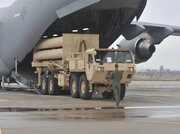
Paper: Why’s the US Air Defense Chain Weak against Iran’s Missiles?
As tensions between the US and Iran escalate and risks of a direct confrontation grow higher, the eyes of international observers are set on West Asia region. Amid American military amassment in the region, a question presents itself: Is Washington’s air defense power efficient enough to counter Iran’s missile power?
-

Paper: Taliban’s New Penal Code Cements Pashtun Rule over Afghanistan
On the fifth anniversary of the Taliban’s comeback to power in Afghanistan, the group has unveiled its new legal code or charter of rule, causing controversy nationwide. The document is expected to replace the previous constitution and is set to determine the legal, executive, and political framework of governing.
-

Paper: Will Board of Peace Initiative Lead to Reopening Rafah Border Crossing?
One of the important outcomes of the session for inking the Board of Peace initiative in Davos forum in Switzerland is the reopening of the Rafah Border Crossing which is one of the key agendas of the Trump-announced board that is designed to run Gaza after war.
-

Paper / Disarming Iraq’s Resistance: A US Pipe Dream
While the resistance groups and other victorious factions in the Iraqi parliamentary elections are busy debating new prime minister and president posts, some political parties are once again trying, with US direction, to stir tensions in the country.
-
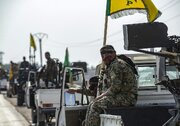
Paper: With Turkey-PKK Peace Faltering, Northern Syria Conflict Growing More Likely
The several-decade dispute between the Turkish government and the Kurdistan Workers Party (PKK) in recent months has seen a contradictory shift: On the one hand, both sides showing pro-peace gestures and disarming the armed militias and on the other hand Turkey and its allies in Damascus amassing forces on the northern Syria borders and adopting a more aggressive discourse.
-

Paper: Is Yemen on Verge of Split?
In recent weeks, southern Yemen provinces have seen fast-moving and surprising developments, sending a majority of observers to warn about sweeping changes in the future landscape of this part of the country.
-
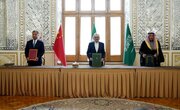
Paper: Tehran-Riyadh Going Beyond De-escalation, Now Seeking Common Cooperation Grounds
As the security and political developments gain pace in West Asia, Iran and Saudi Arabia more than before move towards strengthening bilateral relations and strategic convergence. In this connection, the third joint meeting of the deputy foreign ministers of Iran and Saudi Arabia, accompanied by China, was held on Tuesday in Tehran.